2026 Best China Ppgi Coil Factory Insights for Global Buyers?
In recent years, the demand for pre-painted galvanized iron (PPGI) coils has surged globally, with China becoming a key player. The China Ppgi Coil Factory sector has expanded due to its advanced manufacturing capabilities and competitive pricing. According to a recent industry report, China's market share in PPGI exports reached 40% in 2022, illustrating its dominance.
Global buyers seek reliable suppliers to ensure high-quality products. Many manufacturers in China adhere to international standards, ensuring compliance. Yet, some factories struggle with quality consistency, highlighting the need for diligence in supplier selection. Establishing partnerships with well-reviewed China Ppgi Coil Factory can mitigate these risks.
Moreover, sustainability has become a priority in the manufacturing process. As more companies aim for eco-friendly practices, China's PPGI industry faces challenges in technological advancements. The shift towards greener production methods is essential for maintaining a competitive edge. Buyers should consider these trends while navigating the complex landscape of the PPGI coil market.
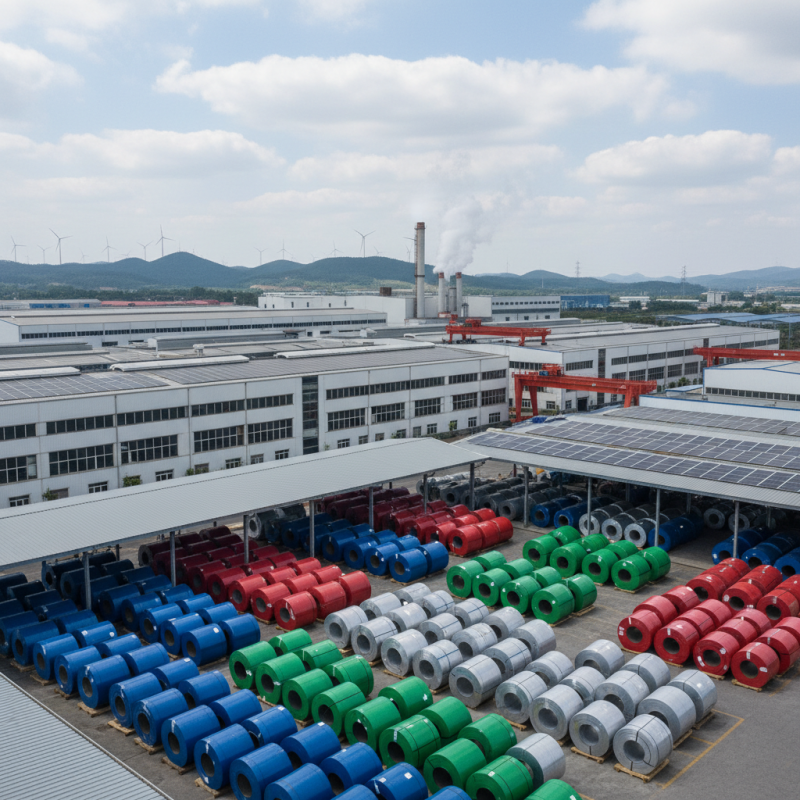
Insights into the Chinese PPGI Coil Market Landscape in 2026
The Chinese PPGI coil market is expected to evolve significantly by 2026. Increasing demand drives manufacturers to innovate. Automation technology enhances production efficiency and quality. This shift could lead to diverse product offerings tailored to global buyer needs.
Sustainability remains a critical concern for manufacturers. Many factories are adopting eco-friendly practices. However, the transition poses challenges. Balancing cost with sustainability efforts can be complex. Buyers must stay informed about these trends, as they impact supply chains and pricing strategies.
Quality assurance will continue to be paramount. As competition intensifies, factories must maintain strict quality standards. Inconsistent product quality can damage reputations and relationships. Buyers should assess partners thoroughly, ensuring they align with their standards and values. Understanding these dynamics will be vital for navigating the Chinese PPGI coil market in 2026.
Key Players in the 2026 China PPGI Coil Industry: A Competitive Analysis
The China PPGI coil industry is witnessing significant evolution as 2026 approaches. Analysts predict that the market will experience a compound annual growth rate (CAGR) of around 5.3%. This growth is largely attributed to increasing demand from sectors like construction and manufacturing. Major players are investing heavily in advanced coating technologies to enhance product durability and aesthetic appeal.
In this competitive landscape, the strength of supply chains is crucial. Recent data shows that logistics and distribution efficiency can impact lead times by up to 20%. As firms strive for market share, embracing digital innovations has become essential. Industry reports emphasize that companies integrating AI and machine learning have improved operational efficiency. However, there are still gaps in adoption, especially among smaller manufacturers.
Despite the positive trends, challenges remain. Quality control issues are still prevalent, with recent surveys indicating that 15% of products fail to meet industry standards. Companies need robust quality assurance protocols to address these concerns. Understanding consumer preferences is also vital. Growing interest in eco-friendly products presents both an opportunity and a challenge for manufacturers to adapt to market needs.
2026 Best China Ppgi Coil Factory Insights for Global Buyers
| Factory Location | Production Capacity (MT/year) | Main Products | Market Share (%) | Export Markets |
| Shandong | 250,000 | PPGI, GI, Color Coated Steel | 25% | Southeast Asia, Europe |
| Zhejiang | 300,000 | PPGI, Perforated Sheets | 20% | North America, Middle East |
| Guangdong | 400,000 | PPGI, Pre-painted Aluminum | 30% | Asia, Africa |
| Henan | 150,000 | PPGI, Coated Steel Strips | 15% | Latin America, Australia |
| Jiangsu | 500,000 | PPGI, Electrical Steel | 10% | Worldwide |
Trends and Innovations Shaping the Chinese PPGI Coil Manufacturing in 2026
The PPGI coil manufacturing landscape in China is undergoing significant changes. In 2026, innovations continue to shape this market. Sustainability is one of the key trends driving these changes. Factories are increasingly adopting eco-friendly practices. This includes the use of water-based coatings and recycling materials. These efforts not only reduce waste but also enhance product durability.
Automation is also transforming production processes. Advanced technologies, like AI and IoT, are streamlining operations. This leads to greater efficiency and reduced human error. Factories can now produce high-quality coils at a faster rate. However, the transition to automation comes with challenges. Companies must invest in employee training to adapt to new systems.
Consumer preferences are shifting towards customized solutions. Buyers are looking for unique designs and specific color options. This demand pushes manufacturers to innovate continuously. They must balance customization with production efficiency. Some factories may struggle with this balance, affecting their competitiveness. Ongoing research and development are essential for overcoming these hurdles.
Sustainability Practices in China's PPGI Coil Production: A 2026 Review
In recent years, sustainability has become a crucial aspect of the PPGL coil production process in China. Many factories are adopting eco-friendly practices. These practices aim to reduce waste and lower carbon emissions. Using recycled materials is gaining traction within the industry. Factories are also implementing energy-efficient technologies. This not only cuts down costs but also contributes to environmental protection.
Yet, challenges remain. Not all factories can afford the transition to sustainable practices. Some firms still rely on traditional methods, which are more polluting. This disparity raises questions about industry standards. Buyers looking for sustainable options may struggle to verify practices. Transparency in sourcing and manufacturing processes needs improvement. Real change requires commitment from both factories and purchasers.
Innovation is essential for advancing sustainable production. Investing in research can yield new eco-friendly materials. Collaboration among industry players can drive improvements. The goal is a greener future for PPGI products. Consumers and buyers increasingly seek responsible options. However, the path to true sustainability is complex and requires ongoing efforts.
Market Demand and Global Trade Dynamics for PPGI Coils by 2026
The market for PPGI (Pre-Painted Galvanized Iron) coils is set to evolve significantly by 2026. Global demand is projected to rise as construction and automotive industries expand. According to a recent report by MarketsandMarkets, the PPGI market could reach USD 32 billion by 2026, driven by increased urbanization and infrastructure investments. This growth indicates heightened competition among manufacturers.
In China, production capabilities continue to enhance. The country dominates the PPGI coil market, supplying over 40% of global demand. This trend raises questions about sustainability and environmental impact. Consumers increasingly prefer eco-friendly options, pushing factories to innovate and adapt. Industry data shows that 30% of buyers prioritize sustainable practices when selecting suppliers, underscoring the need for factories to evolve.
Trade dynamics are also shifting. Factors such as tariffs and trade agreements influence market accessibility. There is a growing concern regarding geopolitical tensions affecting supply chains. Buyers must remain aware of these fluctuations and adjust their strategies accordingly. Adaptation will be essential for achieving resilience in a dynamic market landscape.