Battery Pulse Tester Dci Insights from China Import Export Fair?
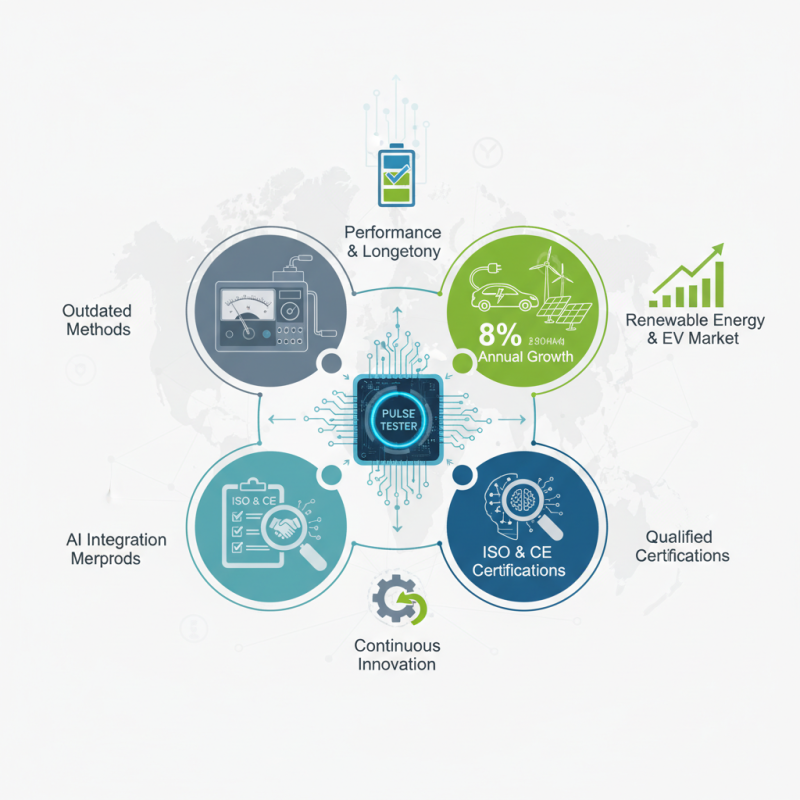
The Battery Pulse Tester For Dci is set to showcase groundbreaking innovations at the upcoming China Import Export Fair. This significant event, taking place from April 15 to May 5, 2026, will focus on advanced manufacturing and electronic devices. As the demand for reliable battery testing increases, industry expert Dr. James Li emphasizes, “Accurate testing is critical for battery performance and longevity.”
Recent market reports indicate that the global battery testing equipment sector is expected to grow by 8% annually, reflecting the surge in renewable energy and electric vehicle markets. The integration of AI technologies at the fair will enhance the procurement process. It allows buyers to identify qualified suppliers meeting certifications like ISO and CE more efficiently.
However, challenges remain. The adoption rate of new testing technologies can be slow. Many companies still rely on outdated methods. Therefore, continuous innovation in the Battery Pulse Tester For Dci is essential. As the market evolves, collaboration and knowledge sharing will be vital for all industry players. The fair will serve as a platform for this advancement.
Battery Pulse Tester: Overview of Functions and Applications
Battery pulse testers play a crucial role in evaluating battery performance. They assess various aspects, such as capacity and discharge rates. This equipment facilitates the analysis of battery health over time. By sending pulse signals, it can determine the inner resistance of a battery. This helps identify potential issues before they become severe.
In practical applications, technicians use battery pulse testers during routine maintenance. They gain insights into the battery's efficiency. However, interpreting the results can be challenging. Factors like temperature and age can affect readings. Technicians must account for these variables to ensure accurate assessments. It's a common oversight that can lead to misdiagnosis.
Additionally, with the growth of electric vehicles, the demand for reliable battery testing increases. Industries are eager to invest in better testing strategies. But, not all testers provide clear or valid data. Users must choose equipment wisely and be aware of limitations. Reflecting on these challenges can lead to improved practices in battery maintenance and evaluation.
Battery Pulse Tester: Overview of Functions and Applications
| Function | Application | Measurement Range | Accuracy | Portability |
| Pulse Testing | Battery Maintenance | 0-1000V | ±1% | Yes |
| Internal Resistance Measurement | Quality Control | 0.1-20Ω | ±2% | Yes |
| Capacity Testing | Performance Evaluation | 0-300Ah | ±3% | Yes |
| Voltage Check | Diagnostic Testing | 0-50V | ±0.5% | Yes |
Market Trends for Battery Pulse Testers in Global Trade Networks
The market for battery pulse testers is evolving rapidly within global trade networks. Recent interactions at trade fairs in China reveal shifting dynamics. Companies are keenly interested in advanced testing technologies, spurred by rising demand. Battery performance is crucial in various sectors, from electric vehicles to portable electronics. Manufacturers need reliable testing solutions to ensure quality and efficiency.
Trends indicate a growing focus on the integration of automated testing systems. Such systems enhance accuracy and reduce human error. Many businesses are exploring new partnerships to meet these demands. However, not all companies are fully prepared for this transition. Some lack the necessary expertise or infrastructure. This gap presents opportunities for those willing to invest in education and technology.
Furthermore, sustainability plays a significant role in shaping market trends. Buyers are increasingly seeking eco-friendly solutions. Yet, challenges remain in sourcing sustainable materials for testers. Companies must navigate these hurdles while remaining competitive. The balance between innovation and practicality is delicate. Continuous evaluation and adaptation are essential for staying relevant in this fast-paced environment.
China's Role in Battery Technology: Export and Import Statistics
China plays a pivotal role in global battery technology. According to the latest industry report, China accounted for 60% of the world's lithium-ion battery production in 2022. This dominance highlights its significant influence in the market and underscores the importance of understanding import and export dynamics.
Recent data from the China Import Export Fair indicates a growing trend in battery exports. In 2022, battery exports increased by 35% compared to the previous year. However, some reports suggest inefficiencies in logistics and quality control. These factors could impact China’s long-term position in the battery technology sector.
On the import front, China primarily sources raw materials. In 2023, imports of lithium and cobalt rose sharply. These materials are vital for battery manufacturing. Although the demand is high, the reliance on foreign resources raises questions about sustainability and self-sufficiency. It’s a complex balance that requires continuous assessment and strategic planning.
Battery Export and Import Statistics (2022)
Key Players in the Battery Pulse Tester Industry at the Fair
The Battery Pulse Tester industry is gaining attention at the recent China Import Export Fair. Key players showcased their latest technologies. The demand for efficient battery testing solutions continues to rise.
According to recent reports, the global battery tester market is expected to reach approximately $1.5 billion by 2025, driven by increased adoption in electric vehicles and renewable energy sectors.
Many manufacturers are focusing on innovative designs to enhance testing accuracy. The use of advanced pulse testing technology is a highlight. It ensures batteries operate optimally and safely. However, some companies face challenges in regulatory compliance. This raises concerns about product safety and longevity. Attendees showed interest in how companies navigate these obstacles.
Tips: Always look for proven technology in battery testing. Focus on suppliers who prioritize compliance and safety. Evaluate different models to understand their features. Establish relationships with manufacturers to gain insights into future innovations. The future lies in collaboration and innovation amidst challenges.
Innovations in Battery Testing: Insights from Recent Exhibits and Demos
The recent exhibits at the China Import and Export Fair showcased innovative battery testing technologies. Companies are increasingly focusing on enhanced testing solutions for lithium-ion batteries. This is crucial as the battery market is projected to grow significantly. According to industry reports, the global battery testing market is expected to reach $5.2 billion by 2027.
A key highlight from the exhibits was the introduction of pulse testing methods. These methods provide accurate performance metrics. They allow manufacturers to evaluate battery health in real-time. However, inconsistent results from different testers remain a concern. It raises questions about standardization across the industry.
Tip: Always verify the calibration of your testing equipment. Such checks can prevent misleading data that could affect production.
Another exciting development is the integration of AI in battery testing. AI algorithms analyze test data to predict battery lifespan. This offers valuable insights into potential failures. Yet, over-reliance on AI could lead to overlooked human factors during testing.
Tip: Maintain a balance between technology and human intuition. This approach will enhance decision-making during testing processes.
Lastly, while innovations are promising, some testers reported difficulties with new technologies. User training is essential to adapt effectively. To improve accuracy, ongoing education within the industry should be prioritized.