2026 Best Wound Care Products You Need to Know?
In today's world, proper wound care is essential for healing and recovery. The right Wound Care Products can make a significant difference. From advanced dressings to innovative treatments, the market is filled with options. However, choosing the right product is not always straightforward.
Many consumers feel overwhelmed by the choices available. Each wound is unique, requiring a tailored approach. Factors such as wound type, size, and location are crucial in making the right decision. This can lead to mistakes and ineffective treatments. It’s important to learn about product ingredients and their benefits.
Wound care isn't just about products. It's about understanding the healing process, too. Using the best Wound Care Products means being informed and proactive. This guide will highlight some of the top options for 2026. With the right knowledge, individuals can enhance their healing journey.
Overview of Wound Care Products in 2026
In 2026, the wound care market continues to evolve, reflecting advances in medical technology and patient care. A recent report indicates that the global wound care market could reach $19 billion by the end of the year. This growth highlights the increased demand for effective and innovative wound management solutions.
New products include advanced dressings and topical agents. For example, bioengineered skin substitutes are gaining popularity, showing promising results in chronic wound healing. These innovative options can reduce healing time by nearly 30%, but they also come with challenges. High costs and limited availability can hinder access for some patients. Many healthcare providers still rely on traditional methods, questioning their efficacy and costs.
As the industry adapts, training for healthcare professionals on the latest products remains critical. Some surveys reveal that 40% of practitioners feel under-informed about new technologies. This knowledge gap may lead to suboptimal care. Continuous education is essential as the landscape shifts, ensuring that patients receive the best possible outcomes in their wound care journeys.
2026 Best Wound Care Products You Need to Know
| Product Name |
Type |
Indications |
Key Features |
User Rating |
| Hydrocolloid Dressing |
Dressing |
Chronic Wounds |
Moisture-retentive, easy to apply |
4.8/5 |
| Antimicrobial Alginate |
Dressing |
Infected Wounds |
Absorbent, reduces odor |
4.9/5 |
| Foam Dressing |
Dressing |
Pressure Ulcers |
High absorbency, comfortable |
4.7/5 |
| Silicone Gel Sheet |
Scar Treatment |
Post-surgical Scars |
Reduces scar visibility, flexible |
4.6/5 |
| Hydrofiber Dressing |
Dressing |
Exuding Wounds |
Conforms to wound shape, absorbs exudate |
4.8/5 |
Key Features to Consider in Wound Care Solutions
When choosing wound care products, consider several key features. The right moisture level is crucial for promoting healing. A 2021 study found that wounds heal 50% faster when kept in a moist environment. Yet, not all products maintain this balance effectively. Some dressings can become overly wet, leading to maceration. Others may dry out too quickly and hinder recovery.
Another important aspect is bacteria management. An estimated 2 million infections occur in the United States each year due to improper wound care. Antimicrobial dressings can reduce this risk. However, the effectiveness of these products varies. Research indicates that 30% of bacteria on wounds might develop resistance to common antimicrobial agents. Monitoring is essential here.
Lastly, ease of application cannot be overlooked. A report in 2020 highlighted that healthcare providers spend 15% of their time on dressing changes. Complicated products create frustration and can lead to errors. Look for options that simplify the process while ensuring safety. Balancing these factors requires careful consideration as no solution is perfect. Each choice involves compromises that warrant reflection from both patients and professionals.
Top Wound Dressings and Their Benefits
Wound care is essential for healing. The right dressing can make a significant difference. Different types of dressings serve unique purposes.
Hydrocolloid dressings are popular for their moisture-retentive properties. They create a gel-like environment that promotes healing. These dressings are ideal for minor burns or deep abrasions. However, they can sometimes cause skin irritation. Always monitor the wound regularly.
Foam dressings provide cushioning and absorb excess exudate. They're useful for moderate to heavy draining wounds. These dressings can be comfortable but may not stick well on very moist skin.
Tips: When applying any dressing, ensure the wound is clean. Assess the wound regularly for signs of infection. Don't hesitate to change the dressing if it becomes wet or soiled. Each wound is unique, and what works for one may not work for another. Be patient and observant in the healing process.
Innovative Technologies in Wound Healing Products
Innovative technologies are transforming wound healing products at a rapid pace. Recent reports indicate that the global wound care market may reach $20 billion by 2026. Novel materials and advanced delivery systems are driving this growth. Research shows that bioengineered skin substitutes have improved healing times significantly. They reduce the risk of infection and promote tissue regeneration.
Smart wound dressings are another breakthrough in wound care. These dressings use sensors to monitor moisture levels and infection indicators. A survey revealed that over 65% of healthcare professionals find these technologies promising. They provide real-time data, enabling better clinical decisions. However, the cost of these innovative products remains a concern. Accessibility can be limited, especially in underfunded healthcare systems.
Furthermore, researchers are exploring the use of nanotechnology in wound care. Nanoparticles can enhance antibacterial properties and promote healing. However, challenges remain in scaling production and ensuring safety. There are questions about long-term effects on human health. As the industry grows, these concerns need to be addressed to fully realize the potential of these advanced solutions.
User Reviews and Recommendations for 2026 Wound Care
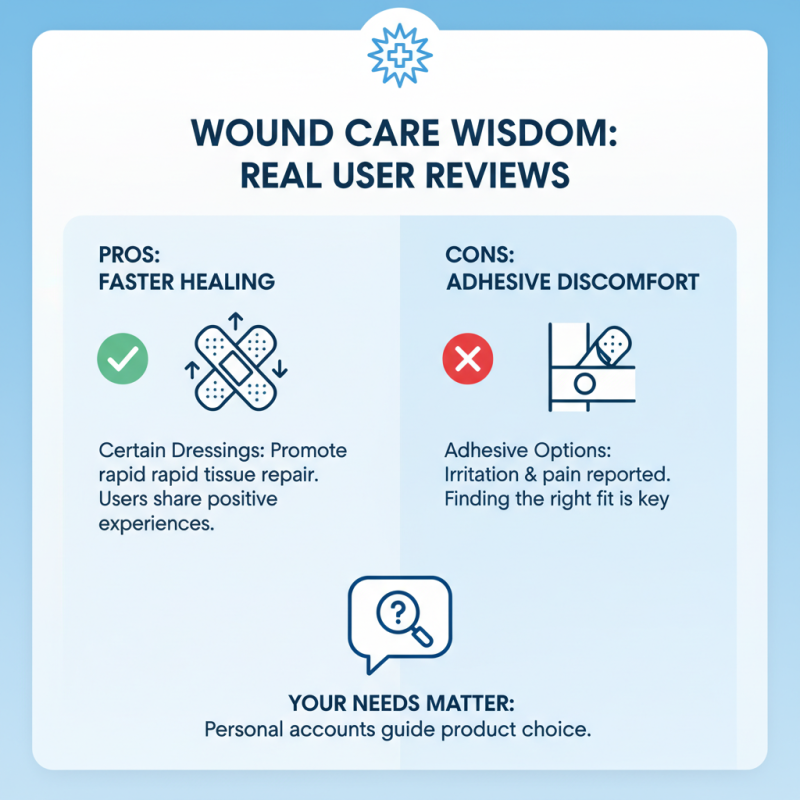
When it comes to wound care, user reviews can be invaluable. Many people share their experiences with different products, highlighting what worked and what didn’t. For instance, some users rave about certain dressings that promote faster healing. Others mention the discomfort of adhesive options. These personal accounts help us understand which products might suit our needs best.
Some reviews emphasize the importance of moisture balance. A few users noted that inadequate moisture could slow healing times. They recommend products designed to keep wounds hydrated without being overly wet. Feedback often points out that not every product is suitable for every type of wound. Experimentation might be necessary, as healing varies from person to person.
Many users reflect on their journeys, acknowledging that they made mistakes along the way. Some ignored early signs of infection. Others chose products based on price rather than effectiveness. The learning process in wound care is ongoing, and these shared experiences can guide new users. Finding what truly works may take time, but the insights from others can help avoid common pitfalls.