How to Choose the Right Wound Care Cleanser for Effective Healing?
Choosing the right Wound Care Cleanser is crucial for effective healing. The global wound care market reached $22 billion in 2022, growing steadily each year. This underscores the importance of selecting appropriate cleansing products for wound management.
Effective wound care cleansers play a pivotal role in the healing process. Research shows that improper cleansing can lead to infection rates rising by 40%. A cleanser must remove debris while preserving healthy tissue. Yet, many healthcare providers overlook specific product characteristics.
Some products contain harsh chemicals that may irritate the skin. Others fail to adequately remove biofilm, a significant barrier to healing. There is no one-size-fits-all approach; preferences and conditions vary greatly. Patients need education on choosing a suitable Wound Care Cleanser. This choice can significantly impact recovery, emphasizing the need for deeper reflection on current practices.
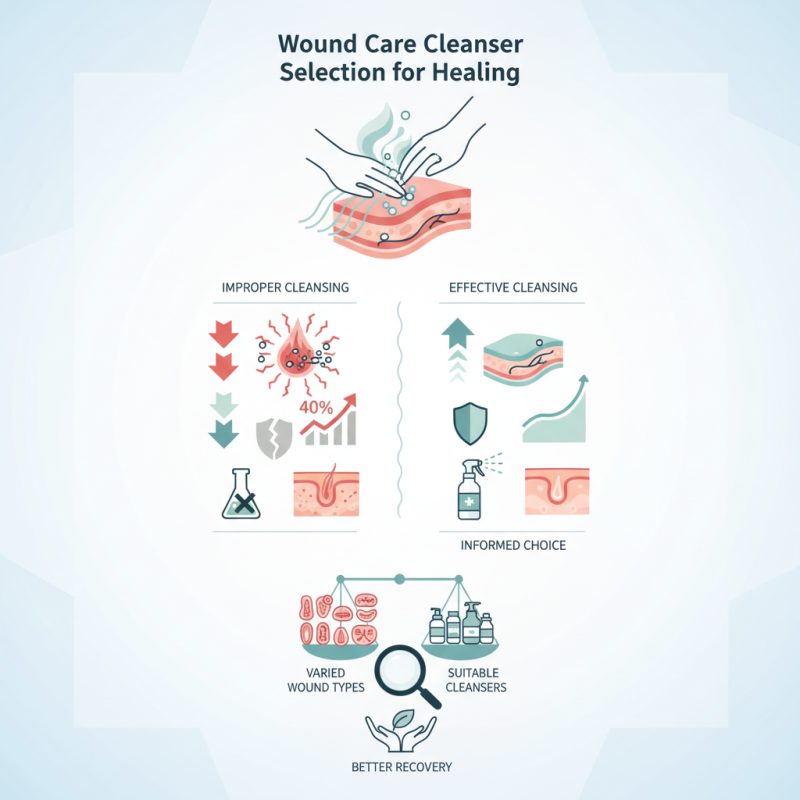
Importance of Selecting the Right Wound Care Cleanser for Healing
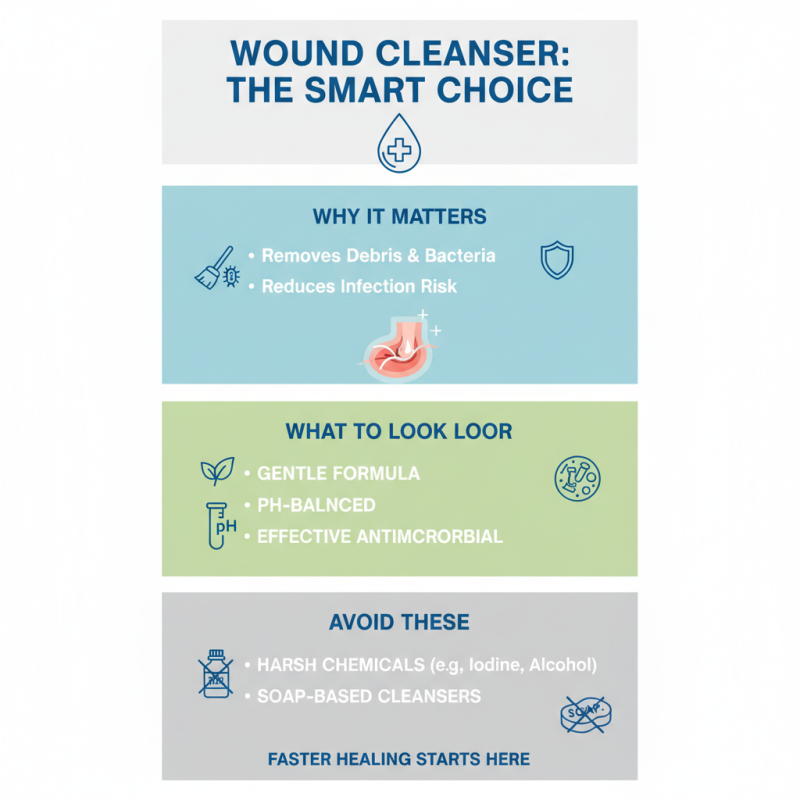
Choosing the right wound care cleanser is crucial for effective healing. A proper cleanser helps remove debris and bacteria from the wound site. This minimizes the risk of infection and promotes faster recovery. Not all cleansers are created equal. Some may contain harsh chemicals that irritate the skin. Others might not be effective at all.
It's important to consider the wound type. For example, a deep wound may require a different approach than a superficial one. The pH level of the cleanser matters too. A balanced pH can support healing, while an unbalanced one may delay it. Pay attention to the ingredients. Natural components can be gentle yet effective. Always perform a patch test if you're unsure about the skin's reaction.
Reflecting on personal experiences can be beneficial. Have you ever used a product that caused more harm than good? Learning from such mistakes can guide better choices in the future. It’s essential to consult with a healthcare professional when in doubt. Their insights can help narrow down the options and ensure an optimal healing environment.
Key Ingredients to Look for in Effective Wound Cleansers
Choosing the right wound care cleanser is vital for effective healing. Not all ingredients are beneficial. It is crucial to know what to look for when selecting a product.
Key ingredients can significantly impact healing. For instance, iodine-based cleansers are known for their broad-spectrum antimicrobial properties. A study by the Wound Healing Society reveals that iodine can effectively reduce infection rates. However, some patients may experience irritation or allergic reactions. Understanding individual skin sensitivity is essential.
Another effective ingredient is saline. It is gentle and promotes moisture, assisting in healing. A report published in the Journal of Wound Care indicates that saline can help reduce pain during wound cleaning. Despite its benefits, saline might not provide the same level of microbial activity as iodine.
Hydrogen peroxide is another option. It can help remove debris but can also damage healthy tissue. A World Health Organization report highlights the balance needed when using aggressive cleansers. The choice of wound care cleanser can be complex and requires careful consideration of the ingredients and their potential effects on healing.
How to Choose the Right Wound Care Cleanser for Effective Healing?
| Ingredient |
Function |
Benefits |
Considerations |
| Saline Solution |
Cleansing agent |
Gentle on wounds, reduces debris |
May not control infection alone |
| Antimicrobial Agents |
Infection control |
Prevents bacterial growth |
Possible irritation, use with caution |
| Hydrogel |
Moisture retention |
Promotes healing in dry wounds |
Not suitable for heavily exudating wounds |
| Enzymatic Cleansers |
Debridement |
Breaks down dead tissue |
Requires proper application technique |
| Sodium Hypochlorite |
Antiseptic |
Effective against a wide range of pathogens |
Can be harsh on healthy tissue |
Comparative Analysis of Alcohol-based vs. Non-Alcohol-based Cleansers
Choosing a wound care cleanser involves understanding the differences between
alcohol-based and non-alcohol-based options.
Alcohol-based cleansers are effective at killing bacteria. They evaporate quickly, leaving a dry surface.
However, they can sting on open wounds, causing discomfort. For patients with sensitive skin,
this can be a significant issue. The potential for irritation must be considered carefully.
Non-alcohol-based cleansers often use gentle surfactants. They cleanse without the harsh effects of alcohol.
This can be beneficial for wounds that require a delicate approach. However, some might not remove debris as effectively.
This raises questions about their efficiency in certain situations. The choice between these types should be tailored to individual needs.
Overall care should prioritize comfort and healing.
Guidelines for Selecting Cleansers for Specific Types of Wounds
Choosing the right wound care cleanser is crucial for healing. Different types of wounds necessitate specific cleaning solutions. For example, chronic wounds may require a non-toxic, gentle cleanser. This minimizes irritation and supports the healing process. Reports suggest that inappropriate cleansers can lead to delayed healing and increased infection rates.
Tips: Always assess the wound type before selecting a cleanser. Consider the wound depth, size, and condition. For superficial wounds, saline solutions may be effective. Deeper wounds might benefit from an enzymatic cleanser that breaks down dead tissue. A 2019 study noted that 32% of patients healed faster with appropriate cleansing methods. Such choices matter greatly in wound care.
Some cleansers may contain substances that irritate sensitive skin. It's vital to test what works best for each individual. Monitor even minor reactions closely. Pay attention to pH-balanced options, as they tend to be less harmful. Remember, evidence suggests that 20% of wounds fail to heal properly due to poor cleaning practices. Always reflect on your methods and adjust as necessary.
Role of pH Balance in Wound Cleaning and Healing Efficiency
Wound care is essential for effective healing. A key factor is the pH balance of the cleansing solution used. The skin's natural pH ranges from 4.5 to 5.5. Maintaining this balance is crucial for optimal healing. An imbalance can lead to delayed recovery and increased risk of infection.
Research shows that cleansers with a neutral pH (around 7) may not support healing as effectively as those that align with skin pH. It can confuse the body’s natural processes. Infected wounds often exhibit an alkaline environment. A 2021 study indicated that wounds treated with pH-balanced solutions showed a 30% faster healing rate. In contrast, those treated with alkaline solutions took longer to heal.
Choosing the right wound cleanser can be challenging. Many products exist, yet not all maintain pH balance. Users often overlook this aspect when making a selection. It is important to recognize that using an inappropriate cleanser can complicate recovery. The right choice can facilitate healing and reduce complications.
Effect of pH Balance on Wound Care Cleanser Efficiency
This chart illustrates the relationship between pH levels of various wound care cleansers and their effectiveness in promoting healing. A pH level that is close to the skin's natural pH (around 5.5) tends to offer the best results in wound care.