Skip to Main Content
I'm looking for

How to Choose the Right Medical Oxygen Mask?

Choosing the right Medical Oxygen Mask is a clinical decision, not a packaging decision. The correct option depends on oxygen flow, patient condition, mask fit, and monitoring requirements. A loose seal may allow oxygen to escape. A tight seal may cause discomfort, skin pressure, or anxiety.

The need is substantial. The Lancet Global Health Commission estimated that more than 374 million adults may require oxygen treatment annually for serious health conditions. The World Health Organization also identifies reliable oxygen delivery as a core part of safe, quality healthcare. These findings make equipment selection more than a purchasing detail. It becomes a patient-safety issue.

Small details matter.

A simple nasal cannula may support a stable patient who needs low-flow oxygen. A simple face mask may suit moderate requirements, but it must maintain an appropriate flow rate. For higher or more controlled oxygen delivery, a Venturi mask can provide a more predictable oxygen concentration. A non-rebreather mask may be considered in urgent situations, under trained clinical supervision and continuous assessment.

The U.S. Food and Drug Administration emphasizes using medical devices according to their intended purpose and labeling. WHO technical guidance also highlights oxygen-source performance, maintenance, and staff training. Therefore, buyers should review flow ranges, connector compatibility, materials, valve design, tubing length, and cleaning instructions.

A comfortable mask is not automatically a safe mask. This is where judgment can fail. Patient age, facial shape, breathing pattern, and skin condition all influence the final choice. This guide examines those practical factors, while recognizing that no checklist replaces professional assessment, local protocols, and careful monitoring.
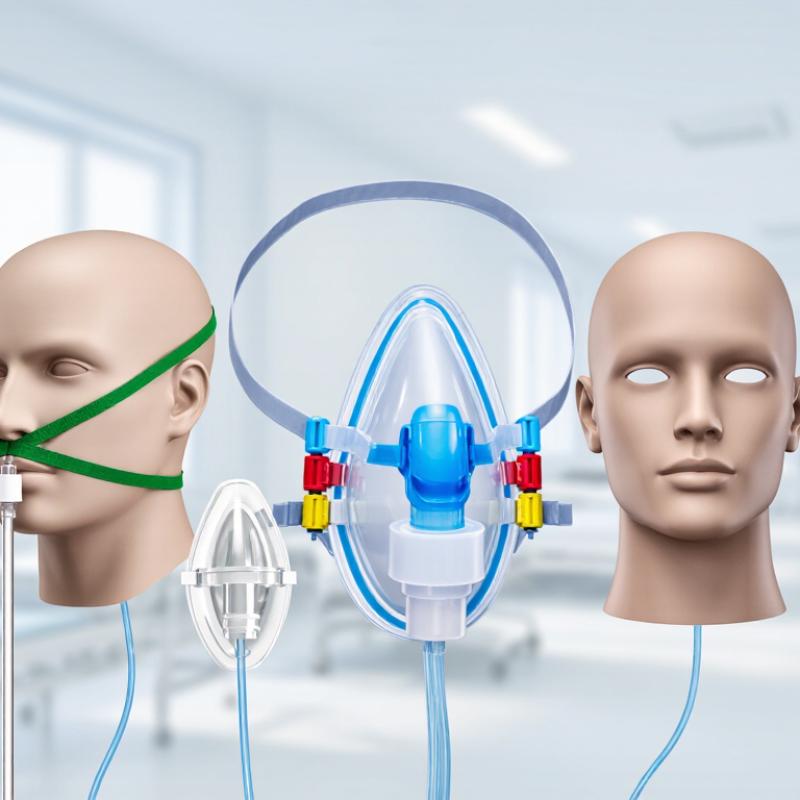
How to Choose the Right Medical Oxygen Mask?

Define the Purpose and Required Oxygen Delivery

How to Choose the Right Medical Oxygen Mask?

The purpose comes before the mask. Is oxygen needed for mild support, controlled delivery, or urgent rescue? A nasal cannula may suit a stable patient needing low-flow oxygen during conversation or meals. A simple face mask offers greater support, but it usually requires at least 5 liters per minute to reduce carbon dioxide rebreathing. Never guess the flow rate.

Required oxygen delivery depends on the patient’s condition, oxygen saturation target, breathing pattern, and clinical instructions. A Venturi mask can provide a more precise oxygen concentration, which may help patients at risk of retaining carbon dioxide. A non-rebreather mask can deliver a high oxygen concentration during severe distress, but its reservoir bag must stay inflated. It also requires close observation and prompt medical assessment.

Small details matter. Check the mask seal, tubing, skin pressure, and humidification needs. A loose mask may deliver less oxygen than expected. A tight mask can cause discomfort and anxiety. Observe breathing effort, alertness, skin color, and pulse oximeter readings, while remembering that readings can be affected by cold fingers or poor circulation. A common bedside mistake is treating one oxygen number as the whole picture. It is not. Patient comfort and changing symptoms may reveal a problem earlier. Oxygen should be adjusted only according to a qualified clinician’s plan, especially when lung disease or carbon dioxide retention is possible.

How to Choose the Right Medical Oxygen Mask?

Define the purpose and required oxygen delivery before selecting a device.

Typical inspired oxygen concentration varies by device, flow rate, mask fit, respiratory pattern, and patient minute ventilation. Low-flow devices are commonly used for stable patients, while controlled or high-concentration systems are considered when a more predictable or higher oxygen delivery is needed.

Compare Medical Oxygen Mask Types and Their Features

How to Choose the Right Medical Oxygen Mask?

Choosing an oxygen device starts with the patient’s breathing pattern, oxygen level, and prescribed flow rate. A nasal cannula feels light and allows eating or speaking. It usually supports low-flow oxygen, often between 1 and 6 liters per minute. However, mouth breathing or nasal blockage can reduce its effectiveness.

A simple oxygen mask provides more coverage than a cannula. It commonly requires at least 5 liters per minute to prevent carbon dioxide rebreathing. A Venturi mask is useful when a precise oxygen concentration matters, especially for patients sensitive to excess oxygen. Its color-coded adapters can deliver controlled levels, such as 24%, 28%, or 35%. Read the markings carefully.

A non-rebreather mask delivers high oxygen concentrations during severe breathing distress. Its reservoir bag should remain partly inflated during inhalation. If it collapses, the flow or seal needs immediate assessment. Fit matters. Check for leaks around the nose and cheeks, but avoid excessive tightness. Skin redness behind the ears can appear quickly.

Clinical guidance should determine the device and flow setting. Oxygen is a treatment, not simply “more air.” A pulse oximeter helps, but readings can be affected by cold fingers, movement, or poor circulation. One detail is easy to miss: comfort influences cooperation. A technically suitable mask may fail if the patient repeatedly removes it. Selection sometimes needs adjustment.

Match the Mask to Patient Needs and Oxygen Flow Settings

Choosing the right medical oxygen mask starts with the patient, not the equipment cabinet. Consider breathing effort, oxygen saturation, consciousness, and the prescribed flow rate. A simple face mask often suits patients needing moderate oxygen support, commonly around 5–10 liters per minute. Never run it below the manufacturer’s safe minimum. Exhaled carbon dioxide may collect inside the mask.

A non-rebreather mask can deliver a higher oxygen concentration during serious breathing difficulty. Its reservoir bag should remain partly inflated during inhalation. If it collapses, check the flow setting, tubing, and mask seal immediately. A Venturi-style mask offers more controlled oxygen delivery, which can help patients sensitive to excessive oxygen. The correct adapter and flow rate must match the ordered concentration. Small errors matter.

Tips: Check the mask seal around the nose and cheeks, but avoid excessive tightness. Watch for skin redness, pressure marks, anxiety, and rising breathing effort. Reassess oxygen saturation after adjustments, rather than trusting the dial alone. Follow local clinical protocols and the prescriber’s instructions. Patient comfort can affect cooperation, yet comfort should not replace effective delivery. In real care, the first choice is sometimes imperfect. Reassessment is essential.

How to Choose the Right Medical Oxygen Mask? - Match the Mask to Patient Needs and Oxygen Flow Settings

Mask Type Typical Oxygen Flow Approximate FiO₂ Best Suited For Important Selection Points Key Limitations and Safety Notes
Simple Face Mask 5–10 L/min Approximately 40–60% Patients requiring moderate oxygen support who can tolerate a mask Useful when a nasal cannula is insufficient or poorly tolerated; select a properly fitting adult or pediatric size Do not use below 5 L/min because exhaled carbon dioxide may accumulate; FiO₂ varies with breathing pattern, mask fit, and minute ventilation
Venturi Mask Usually 2–15 L/min, depending on the jet or adapter Typically 24%, 28%, 31%, 35%, 40%, or 50–60% Patients needing a more controlled and predictable oxygen concentration, including some patients at risk of carbon dioxide retention Choose the color-coded or labeled adapter according to the prescribed FiO₂; follow the adapter’s stated minimum flow The delivered concentration can be affected by leaks, obstruction, or incorrect flow; monitor blood gases or clinical response when indicated
Non-Rebreather Mask 10–15 L/min Approximately 60–90% when fitted correctly Severe hypoxemia, acute respiratory distress, or patients needing a high initial oxygen concentration while definitive treatment is arranged Ensure the reservoir bag is inflated before application and remains partially inflated during inspiration; use a close-fitting mask Requires an adequate breathing pattern and a functioning one-way valve system; not suitable for an apneic patient or as a substitute for ventilatory support
Partial Rebreather Mask 6–10 L/min Approximately 35–60% Patients needing more oxygen than a simple mask can provide but not requiring a non-rebreather configuration Use a reservoir bag and adjust flow so the bag does not fully collapse during inspiration The delivered FiO₂ is variable; carbon dioxide rebreathing may occur if flow is inadequate or the mask is poorly fitted
Aerosol Mask Commonly 6–12 L/min, according to the nebulizer or entrainment system Variable; often approximately 28–60% Patients who need humidified oxygen, have facial trauma, or cannot tolerate a standard tight-fitting mask Choose when humidity is clinically important or when a loose interface is needed; confirm adequate aerosol output and gas flow FiO₂ is less predictable; condensation, secretion buildup, or an improperly assembled system can reduce effective oxygen delivery
High-Flow Nasal Oxygen Interface Usually 20–60 L/min in adults Approximately 21–100%, set using an air–oxygen blender Acute hypoxemic respiratory failure or patients needing heated, humidified high-flow support while maintaining some ability to eat and communicate Select based on oxygenation, work of breathing, comfort, humidification needs, and the availability of close monitoring Requires specialized equipment and monitoring; escalating respiratory distress or worsening gas exchange requires urgent clinical reassessment
Non-Invasive Ventilation Mask
(CPAP or BiPAP Interface)
Oxygen flow is set by the ventilatory device; supplemental oxygen may be blended into the circuit Variable and dependent on device settings, leak, and patient ventilation Selected patients with ventilatory failure, obstructive sleep apnea, cardiogenic pulmonary edema, or chronic respiratory disease under clinical supervision Choose a nasal, oronasal, or full-face interface according to breathing route, required pressure, facial anatomy, and tolerance This is ventilatory support, not a conventional oxygen mask; avoid or use only with specialist assessment when airway protection is impaired, vomiting is active, or the patient is unable to cooperate

Clinical note: Oxygen should be prescribed and titrated to the patient’s clinical condition and target saturation range. Typical adult target ranges are often 94–98% for most acutely ill patients and 88–92% for patients at risk of hypercapnic respiratory failure, unless a clinician specifies otherwise. Flow rates and FiO₂ values are approximate and vary with device design, mask fit, respiratory pattern, and patient factors.

Check Fit, Comfort, Safety, and Infection Control

Choosing the right medical oxygen mask begins with the prescribed oxygen therapy, not appearance. A healthcare professional should confirm the mask type and flow setting. It should cover the nose and mouth without pressing painfully against the cheeks. Check for air leaks, loose straps, and tubing that could bend during movement. A good fit supports steady breathing while allowing clear communication.

Comfort affects safe use. Look for soft edges and stable straps, then inspect the skin around the nose, ears, and cheeks. Red marks should not be ignored. A mask may feel fine during the first few minutes, yet become irritating after longer use. If breathing feels difficult, do not simply tighten the mask. Ask a qualified clinician to reassess the fit and oxygen plan.

Tips: Wash your hands before handling the mask. Use it only for the intended patient. Follow the care instructions and clinical cleaning protocol. Replace it when damaged, heavily soiled, or difficult to clean. Keep oxygen away from smoking, flames, sparks, and oily products. Never change the prescribed flow without professional advice. Infection control is easy to underestimate, especially when equipment looks clean. Regular checks still matter.

Verify Proper Use, Maintenance, and Replacement Requirements

How to Choose the Right Medical Oxygen Mask?

Choosing a medical oxygen mask starts with fit, not appearance. The cushion should seal gently around the nose and mouth. It should not press against the eyes or leave deep marks. Check the oxygen port, tubing, and connector before use. A loose connection can reduce delivered oxygen. A tight seal can cause discomfort or skin injury. WHO’s Global Patient Safety Action Plan reports that about one in ten patients experiences harm during healthcare, with more than half considered preventable.

Clean hands before touching the mask. Inspect it under bright light. Look for cracks, clouding, hardened plastic, blocked openings, or stretched straps. Clean reusable parts only as directed in the manufacturer’s instructions. Do not improvise with household chemicals. CDC surveillance data estimates that one in 31 hospital patients has at least one healthcare-associated infection on a given day. That figure makes routine handling important, even when the mask looks clean.

Replacement timing should be written into the care plan. Replace single-use masks after use, according to facility policy. Replace reusable masks when damage, odor, discoloration, or poor fit appears. Follow the stated service life, even if the mask seems usable. Keep a simple record of cleaning and replacement dates. This step is often missed. Oxygen flow alone cannot correct a poor seal, blocked tubing, or an unsuitable mask. Recheck the patient’s comfort, breathing, skin condition, and prescribed oxygen level. A second inspection is rarely wasted.

Contact us