
How to Choose the Right Wound Dressing?
Choosing the right Wound Dressing is not a matter of picking the thickest pad or the newest product. It means matching the dressing to the wound’s condition and the person’s needs. A shallow scrape, a heavily draining ulcer, and fragile skin around a wound call for different considerations. There is no universal choice.
Professor Keith Harding, a wound-healing specialist, has championed patient-centred wound care. In paraphrase, his guiding idea is: “Choose for the wound, and for the person living with it.” This is a summary, not a verbatim quotation. It captures an important point: comfort, mobility, allergies, and the ability to change a dressing matter alongside wound appearance.
Look closely. Is the wound dry, moist, or producing heavy drainage? Is the surrounding skin red, delicate, or easily irritated? Dressings may protect tissue, manage fluid, or help maintain a suitable moist environment, but the right function depends on the situation. A dressing that sticks can hurt during removal. One that traps too much fluid may also cause problems. Small details matter.
This guide explains common dressing types and the factors that help distinguish them. It cannot replace an assessment by a qualified healthcare professional, especially when a wound worsens, smells unusual, becomes increasingly painful, or shows signs of infection. Wound care can look straightforward. It is not always. Even experienced people may need to pause, reassess, and ask whether the dressing still fits the wound today.
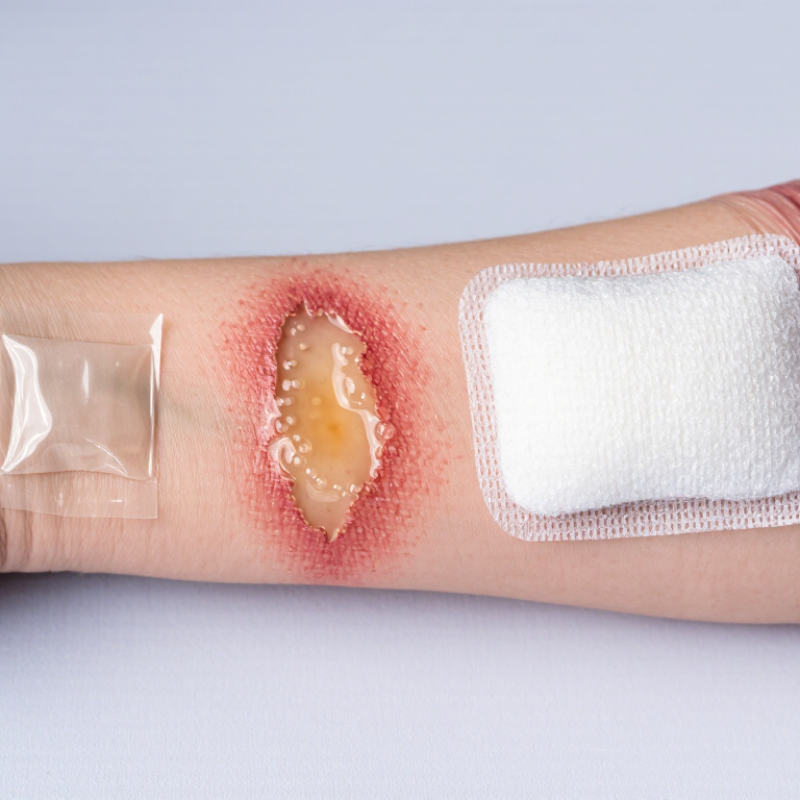
Assess the Wound’s Type, Depth, and Healing Stage
How to Choose the Right Wound Dressing?
Assess the wound’s type, depth, and healing stage before choosing a dressing. A shallow surgical incision differs from a draining venous ulcer or a pressure injury. NPIAP staging guidance describes pressure injuries by the tissue involved and how much is visible; depth may be hard to judge when slough covers the wound. Look at the wound bed, surrounding skin, and amount of drainage. Also consider the cause: a dressing cannot correct pressure, poor circulation, or uncontrolled blood glucose. The CDC’s National Diabetes Statistics Report 2024 estimates that 38.4 million people in the United States have diabetes, a condition associated with foot-wound risk.
Tips: Match absorbency to drainage: a wet wound may need more fluid handling, while a dry wound may need protection from further drying. Keep nearby skin clean and protected. Recheck the wound and dressing regularly. Small changes matter. Note odor, increasing redness, warmth, pain, or drainage, and seek clinical advice if these appear. Deep wounds, exposed structures, or wounds that are not improving need professional assessment. It is easy to misread a wound from one glance; reassess it, and ask a clinician when uncertain.
How to Choose the Right Wound Dressing? - Assess the Wound’s Type, Depth, and Healing Stage
| Wound Type or Healing Feature | What to Assess | Dressing Considerations | Monitoring and Cautions |
|---|---|---|---|
| Superficial wound, such as a minor abrasion | Skin is scraped or shallowly damaged; note any dirt, bleeding, pain, and light drainage. | After gentle cleansing, a protective dressing that maintains a slightly moist wound surface may support healing. A simple non-adherent contact layer can help reduce trauma during removal. | Change the dressing if it becomes wet, dirty, loose, or saturated. Seek care for increasing redness, warmth, swelling, pain, or pus. |
| Partial-thickness wound | Damage extends through the epidermis into part of the dermis; the wound may be pink or red and may produce light to moderate fluid. | Consider a non-adherent contact layer or a moisture-balancing dressing suited to the amount of drainage. The cover should protect the wound without sticking to the healing surface. | Check that the surrounding skin is not becoming soft, pale, or irritated from excess moisture. Reassess if drainage or pain increases. |
| Full-thickness wound | Damage extends through the dermis and may involve subcutaneous tissue. Assess depth, tissue appearance, drainage, surrounding skin, and any undermining. | Dressing choice depends on the wound bed and drainage. A cavity may need a dressing that gently fills dead space while still allowing removal; avoid tight packing. | Deep or complex wounds should be assessed by a qualified healthcare professional. Do not force material into a wound or use a dressing that obscures important changes. |
| Dry wound or dry necrotic tissue | Look for dry, firm, dark tissue or a dry wound bed. Assess circulation and the cause of the wound, especially on the foot or lower leg. | Do not automatically add moisture or attempt debridement. The appropriate approach depends on the wound and blood supply; a clinician should guide care when necrosis is present. | A stable, dry heel eschar may be left intact in some situations, particularly when circulation is poor. Seek prompt clinical assessment for changes, drainage, redness, or signs of infection. |
| Slough or a moist wound bed | Slough is usually yellow or tan and may be moist. Assess the amount of drainage, odor after cleansing, wound depth, and surrounding skin. | A moisture-balancing dressing may be selected according to drainage. Debridement decisions should account for the wound’s cause, circulation, infection risk, and the person’s overall health. | Persistent or increasing slough, worsening odor, spreading redness, or rising pain warrants reassessment. Do not debride without appropriate clinical direction. |
| Granulating wound | Healthy granulation tissue is generally moist and red or pink. Note whether it bleeds easily and whether drainage is light, moderate, or heavy. | Protect the fragile tissue with a non-adherent contact layer and a suitable cover. Choose absorbency based on drainage while avoiding unnecessary drying. | Avoid dressings or removal methods that traumatize the wound bed. New bleeding, increasing pain, or a change in tissue appearance should be assessed. |
| Epithelializing wound or closing edges | New, delicate skin may appear pink at the edges or across a shallow wound. Check for dryness, friction, and continued drainage. | Use gentle protection that minimizes friction and avoids adherence to new tissue. A dressing may no longer be needed once the surface is closed, depending on the wound and clinical advice. | Handle the area gently. Watch for reopening, new drainage, or signs of infection, and protect the healing skin from repeated pressure or friction. |
| Wound with moderate or heavy drainage | Estimate how quickly the dressing becomes wet and check for leakage, maceration, and changes in the amount or character of fluid. | Choose an absorbent dressing appropriate to the drainage and wound depth, with a cover that helps protect surrounding skin. The dressing should not adhere to the wound bed. | Frequent saturation or a sudden increase in drainage needs reassessment. Persistent heavy drainage may require evaluation of the underlying cause. |
Important: Dressing selection should be based on a full assessment of the wound, its cause, drainage, surrounding skin, circulation, and the person’s health. Seek professional care for deep, infected, rapidly worsening, or non-healing wounds, or for wounds in people with diabetes or known circulation problems.
Related Posts
-
Chinese Manufacturing Elevates Quality of Wound Dressings for Global Success
-

How to Optimize Your Healing Process with Wound Healer Techniques
-
The Essential Role of Wound Cleanser in Modern First Aid Protocols with 70 Percent Reducing Infection Rates
-

Top 5 Wound Protection Solutions You Need to Know?
-
How to Choose the Right Wound Care Cleanser for Effective Healing?
-

China Top Wound Care Management Solutions for Global Buyers?


