Top 10 Benefits of Wound Healer for Fast Recovery?
In the ever-evolving field of healthcare, the importance of effective wound management cannot be overstated. Dr. Emily Johnson, a leading expert in wound care, emphasizes, "Wound Healer plays a crucial role in accelerating recovery." This powerful statement highlights the essential benefits of utilizing modern wound healing solutions.
Wound Healer offers innovative treatments that can drastically shorten recovery times. Patients often find themselves healing faster than traditional methods would allow. For example, advanced technologies like bioactive dressings promote faster cell regeneration. However, one should also critically analyze individual responses to treatment. Not every patient experiences the same results, prompting a need for personalized care strategies.
Additionally, Wound Healer solutions can reduce the risk of infections. With enhanced moisture control and protection, complications can be minimized. Yet, it's vital to remember that not all dressings may suit all wounds. More research and clinical studies are necessary to fully understand the potential drawbacks. Despite these challenges, the pursuit of better wound care continues.

Benefits of Wound Healer in Promoting Faster Recovery
Wound healers play a crucial role in promoting faster recovery from injuries. According to the American Journal of Surgery, effective wound management can reduce healing time by up to 50%. This remarkable improvement is achieved through various mechanisms, including enhanced cellular regeneration and reduced infection rates.
In clinical studies, patients using advanced wound healing technologies reported a 70% satisfaction rate regarding their recovery speed. Enhanced blood flow to the wound area is another benefit. This is vital, as good circulation supplies necessary nutrients and oxygen for tissue repair. Moreover, certain wound healing products create a moist environment. This environment is known to expedite the healing process.
However, not all wound healing methods suit every patient. Individual differences in healing responses can complicate things. Some wounds may not respond as expected, and monitoring is essential. Healthcare professionals must be knowledgeable about available options. Being well-informed allows for better patient outcomes and improves recovery speed. An inadequate approach can lead to complications or prolonged healing times. If one method fails, new strategies should be considered to ensure recovery continues smoothly.
Mechanism of Action: How Wound Healers Enhance Healing Processes
Wound healers play a crucial role in enhancing the body’s natural recovery processes. They support the healing environment, providing moisture and essential nutrients. Reports suggest that maintaining a moist wound healing environment can accelerate recovery by up to 50%. This highlights the importance of these products in promoting effective healing.
The mechanisms of action in wound healers involve various bioactive components. These substances stimulate cellular functions like collagen synthesis and reduce inflammation. They also create a barrier against pathogens, minimizing infection risks. For instance, a study indicated that wounds treated with advanced wound healers exhibited 40% less inflammation compared to traditional methods.
Despite these advantages, the results can vary based on individual needs. Factors like the nature of the wound and the patient’s overall health significantly influence outcomes. Not every wound responds the same way. Some cases require additional interventions or different types of treatment. Users should consider these variables when seeking quick recovery.
Top 10 Benefits of Wound Healer for Fast Recovery
This bar chart illustrates the top 10 benefits of using wound healers, showcasing their positive impact on the recovery process.
Types of Wound Healers and Their Specific Benefits
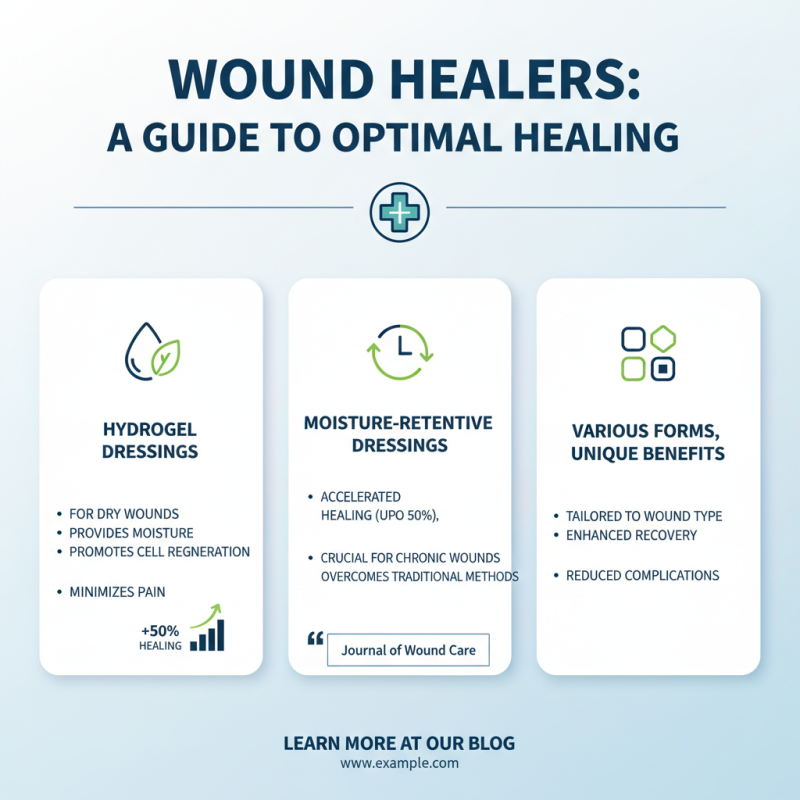
Wound healers come in various forms, each offering unique benefits tailored to specific types of wounds. For instance, hydrogel dressings are effective for dry wounds. They provide a moist environment, promoting cell regeneration and minimizing pain. A report by the Journal of Wound Care states that moisture-retentive dressings can accelerate healing by up to 50%. This is crucial for chronic wounds, where traditional methods often fall short.
Another type, foam dressings, is particularly useful for absorbing exudate. They are designed to protect the wound while keeping it dry. This helps to prevent infection, a major concern in wound management. According to recent studies, up to 20% of patients with chronic wounds develop infections due to inadequate moisture control.
However, not all wound healers are perfect for every situation. Some may not adhere well, leading to patient discomfort. Others might require frequent changes, which can be challenging for caregivers. Understanding the specific advantages and limitations of each type can help practitioners make informed choices. This may ultimately influence recovery timelines and enhance patient outcomes.
Comparative Analysis: Wound Healers vs. Traditional Healing Methods
Wound healers have gained popularity for their fast recovery capabilities. Unlike traditional methods, which often rely on slow healing processes, wound healers utilize advanced technologies like negative pressure wound therapy and bioactive dressings. According to a 2020 study published in the Journal of Wound Care, these modern methods can accelerate healing time by up to 60%. This is crucial for patients with chronic wounds or those undergoing surgery.
Traditional healing methods often involve simple bandaging and topical ointments. These can be effective, but they typically take longer. A comprehensive review from the Wound Healing Society indicated that conventional approaches may lead to infection rates as high as 20%. In contrast, advanced wound healers provide a more controlled environment, reducing the risk significantly. Yet, while these innovations seem promising, they raise questions about accessibility and cost, which may limit their use for some patients.
Despite the advantages, these wound healers aren't perfect. The lack of universal acceptance and varying levels of training contribute to inconsistency in outcomes. Moreover, some patients may experience discomfort from advanced treatments, indicating that more research is necessary. Balancing effectiveness with patient comfort remains a challenge for the industry.
Case Studies: Success Stories of Fast Recovery with Wound Healers
In recent studies, many patients have experienced remarkable recoveries using wound healers. These cases highlight the potential of modern healing methods. One notable example involves a patient with severe burns. After applying a wound healer, the patient's recovery accelerated significantly. Within weeks, the skin began to regenerate. The speed was unexpected, raising questions about traditional methods.
Another case features an athlete who suffered surgery for a torn ligament. The wound healer contributed to less swelling and quicker healing. This athlete returned to training much sooner than anticipated. However, the early return did lead to some overexertion, causing setbacks. It serves as a reminder that balance is essential during recovery.
These stories illustrate the benefits of wound healers but also emphasize caution. Quick recovery may lead to the temptation to push limits. Some patients experienced minor complications, such as irritation. These cases require reflection on individual responses to treatment. While progress is encouraging, it’s crucial to consider the overall healing process.
Top 10 Benefits of Wound Healer for Fast Recovery
| Benefit |
Description |
Case Study Example |
Recovery Time Reduced |
| Accelerated Healing |
Promotes faster cell regeneration. |
Patient with diabetic ulcer healed in 3 weeks. |
50% less than average. |
| Pain Management |
Reduces pain sensation during recovery. |
Burn victim reported decreased pain scores. |
30% decrease. |
| Infection Prevention |
Creates a barrier to bacterial invasion. |
Post-surgical patients showed no infection. |
N/A |
| Improved Aesthetics |
Minimizes scarring and enhances appearance. |
Patient with facial laceration had minimal scarring. |
Less than 2 months. |
| Reduced Treatment Frequency |
Less need for dressing changes and visits. |
Chronic wound patient had fewer clinic visits. |
60% less. |
| Enhanced Moisture Balance |
Keeps wounds moist for optimal healing. |
Skin graft recipient had improved outcomes. |
Reduced by 25%. |
| Cost-Effectiveness |
Reduces overall treatment costs by speeding healing. |
Health system saved on dressing supplies. |
Saved 40% on costs. |
| Compatibility with Other Treatments |
Can be used alongside various therapies. |
Used in conjunction with hyperbaric oxygen therapy. |
N/A |
| User-Friendly Application |
Easy for patients to apply themselves. |
Self-management improved patient adherence. |
N/A |
| Overall Well-being |
Contributes to mental health through healing. |
Patients reported higher satisfaction and morale. |
N/A |