What is the Universal Bone Drill and How is it Used?
The Universal Bone Drill is a crucial tool in modern orthopedic surgery. Dr. Emily Carter, a renowned orthopedic surgeon, emphasizes its significance by stating, "The Universal Bone Drill has revolutionized our approach to bone procedures." This versatile instrument allows for precise drilling in various surgical scenarios.
Surgeons use the Universal Bone Drill for tasks such as joint repairs, fracture fixation, and implant placements. Its design accommodates a range of bone types and densities. However, mastering its use takes time and practice. Each surgeon must find their technique to achieve the best results.
Despite its advantages, the Universal Bone Drill is not without challenges. Incorrect usage can lead to complications. Therefore, training and experience are vital. Surgeons must constantly refine their skills to harness the full potential of this powerful tool. The importance of ongoing education in this field cannot be overstated.
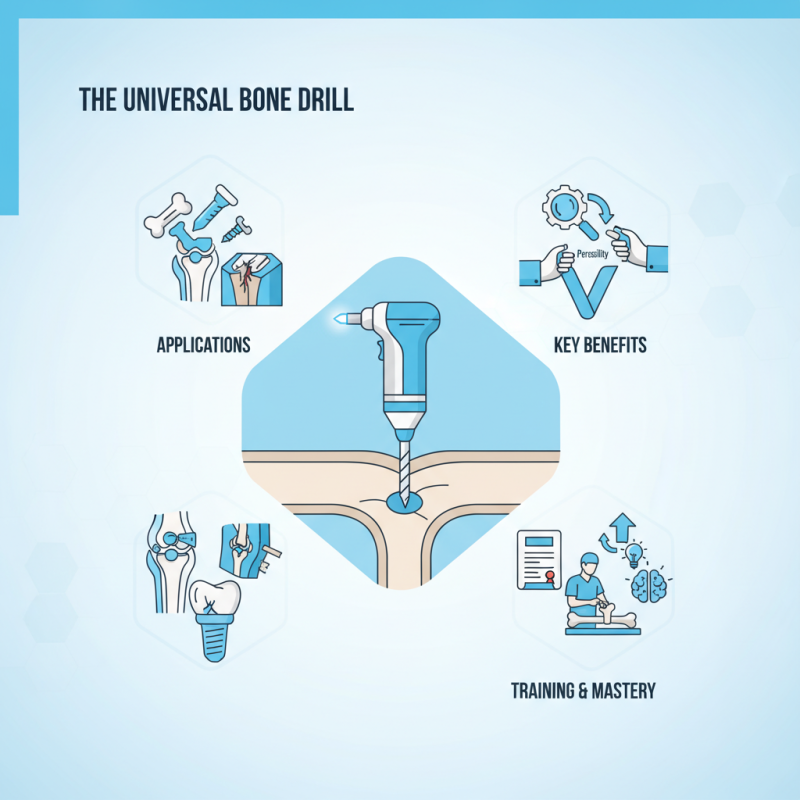
The Definition and Purpose of the Universal Bone Drill
The Universal Bone Drill is a vital tool in orthopedic surgeries. It serves to create precise holes in bone, facilitating the insertion of screws or other fixation devices. The drill is designed for versatility, allowing it to be used across various procedures, including fracture repairs and joint surgeries.
According to a recent industry report, the demand for orthopedic tools like the Universal Bone Drill is expected to grow by 7% annually. This surge reflects an increasing number of surgeries correlating with an aging population. However, variability in surgical techniques can affect outcomes. Not all practitioners may be familiar with best practices for drill usage, leading to potential complications.
An effective use of the Universal Bone Drill requires both skill and understanding. Studies have shown that improper positioning can lead to setbacks during surgery. Many surgeons are still learning how to optimize their techniques with new equipment. Feedback loops from surgical outcomes can improve proficiency, yet gaps in training persist. Continuous education in drill usage remains essential for ensuring patient safety and health.
Overview of the Components of the Universal Bone Drill
The Universal Bone Drill is an essential tool in orthopedic surgery. It consists of several key components. The drill body, made from durable materials, houses the motor. This motor drives the drill bit, which is crucial for creating holes in bone. Each drill bit varies in size and shape, accommodating different surgical needs.
Tips: Always check the drill for wear and tear before use. A worn drill bit can lead to complications.
The power source can be electric or battery-operated. Electric models often provide consistent performance, while battery-operated ones offer portability. Additionally, some drills come with interchangeable attachments, enhancing their versatility.
Tips: Sterilization is vital. Ensure all components are properly cleaned before each procedure. Neglecting cleanliness can lead to infections.
The ergonomics of the handle are designed for comfort. Surgeons can maneuver the drill with precision. However, improper grip can result in fatigue or mistakes. Regular practice is essential to master its use.
Step-by-Step Guide to Using the Universal Bone Drill
The Universal Bone Drill is a versatile tool in orthopedic surgery. It allows precise drilling into bone tissue for various procedures, including fracture fixation and joint surgery. Familiarity with its operation is essential for ensuring successful outcomes.
To effectively use the Universal Bone Drill, one should begin by ensuring the drill is clean and sterilized. Preparing the surgical site is crucial. Mark the desired drilling area on the bone to avoid unnecessary complications during the procedure.
Engage the drill at a low speed initially. This helps maintain control and reduces heat, which can damage the surrounding tissue. Increment the speed cautiously as needed. Monitoring drill depth is vital; exceeding appropriate depth can lead to fractures or other complications.
Tip: Always keep an eye on the drill’s resistance. If you encounter unexpected resistance, stop immediately. This can indicate a problem, like hitting a nerve or other critical structure.
After drilling, inspect the area. Check for bone debris or damage. This step prevents infection. Many professionals underestimate post-drill inspection. However, it plays a significant role in recovery. Make this a routine part of your process.
Usage of the Universal Bone Drill
Safety Precautions and Best Practices in Bone Drilling
When using a Universal Bone Drill, safety should always come first. Proper training is essential. Anyone operating the drill must understand its mechanics and potential risks. The workspace must be clean and well-organized, minimizing distractions. It’s vital to wear personal protective equipment, such as goggles and masks. Some drills create dust, which can be harmful if inhaled.
Another key aspect is patient positioning. Ensure the patient is stable and comfortable. Poor positioning can lead to improper drilling angles. This can increase the risk of injury. During the procedure, the operator should maintain a steady hand and focus. Fatigue can lead to mistakes. Regular breaks can help keep concentration sharp.
Keep in mind the drill's maintenance. A poorly maintained drill can lead to complications, including malfunctions. Regular checks for wear and tear are crucial. Lastly, always evaluate the outcome after each procedure. Reflect on what went well and what could be improved. This process is vital for developing skills and ensuring patient safety.
Common Applications and Procedures Involving the Universal Bone Drill
The Universal Bone Drill is an essential tool in orthopedic surgery. It allows surgeons to perform precise drilling for various procedures. Common applications include the installation of orthopedic implants, fixation devices, and harvesting bone grafts. The drill's versatility makes it suitable for both major and minor surgical interventions.
In a study by the Journal of Orthopedic Research, it was found that the Universal Bone Drill increased surgical efficiency by nearly 30%. Surgeons reported shorter operation times, which can significantly reduce patient exposure to anesthesia. The drill is also used in procedures like arthroplasties and spinal fusions, where precision is crucial.
However, the use of the Universal Bone Drill comes with challenges. Proper training is vital to minimize surgical errors. A report by the American Academy of Orthopedic Surgeons highlighted that 15% of complications during drilling stem from improper technique. Surgeons must continually refine their skills to ensure safety and effectiveness.
What is the Universal Bone Drill and How is it Used? - Common Applications and Procedures Involving the Universal Bone Drill
| Application | Description | Procedure | Benefits |
| Orthopedic Surgery | Used to create precise holes in bone for the placement of screws or pins. | Incision made, drill applied to the bone, hole drilled under controlled conditions. | Minimized trauma to surrounding tissues, faster recovery. |
| Dental Implants | Facilitates the insertion of dental implants by creating the necessary socket. | Local anesthesia applied, drill used to create the socket in the jawbone. | Improved precision for implant placement, enhanced patient comfort. |
| Trauma Surgery | Used to stabilize broken bones by drilling for fixation devices. | Emergency setting, drill used to create stabilizing holes for screws. | Critical for quick stabilization, helps prevent further injury. |
| Bone Biopsy | Used to extract bone tissue for histological examination. | Drill carefully used to obtain a sample from the target bone. | Minimally invasive with accurate sampling. |