Why Is Shilajit Extract Popular with Global Buyers?
Shilajit Extract has moved from a niche ingredient toward wider international attention. Buyers encounter it in capsules, powders, and resin-like products, often marketed for traditional use and mineral content. Yet the commercial story is not as clear as the packaging suggests. Public market reports rarely separate Shilajit Extract from the broader dietary supplement category, so precise global sales figures are difficult to verify.
The wider market offers useful context. Grand View Research valued the global dietary supplements market at about US$177.5 billion in 2023 and projected a 9.1% compound annual growth rate from 2024 to 2030. This figure is not a Shilajit sales estimate. It signals a large, expanding category where buyers increasingly compare ingredients, sourcing, and product documentation. Details matter. A clean label, a traceable supplier, and a batch-specific certificate of analysis can help buyers assess quality more meaningfully than broad promotional claims. Testing may address identity, contaminants, and consistency, but standards and methods can vary.
There are limits. Traditional use does not prove a health outcome, and market growth does not guarantee product quality. Buyers should examine the evidence, not just the story. That scrutiny is worthwhile. For global purchasers, Shilajit Extract’s appeal rests not only on heritage, but also on transparent sourcing and reliable quality controls. The evidence base still has gaps, and responsible suppliers should say so plainly.
What Is Shilajit Extract and How Is It Formed?
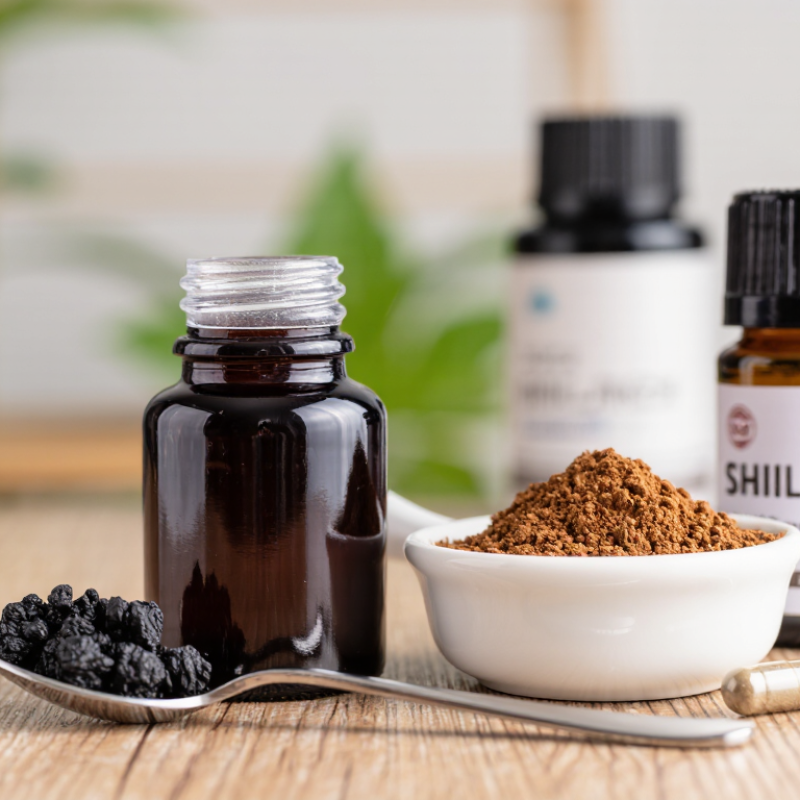
Shilajit extract comes from shilajit, a dark, sticky substance that seeps from cracks in mountain rocks. It is often found in high-altitude regions, where seasonal warmth can soften deposits and make them visible. The material may look like glossy brown-black resin, but its composition is more complex than its appearance suggests. It contains organic compounds and minerals, including fulvic substances, though levels vary from one deposit to another.
How does it form? There is no simple, fully settled explanation. Researchers generally link shilajit to plant material and other organic matter gradually changing within rock layers over long periods. Microbial activity, mineral contact, pressure, and repeated cycles of heat and moisture may all contribute. The exact balance is still debated. That uncertainty matters. Shilajit is not a single, uniform compound, and its natural origin does not guarantee consistent quality.
To make an extract, collected material is typically dissolved, filtered, and dried to remove rock fragments and other unwanted matter. The details affect the final product. A careful assessment looks at identity, composition, and testing for contaminants, rather than relying on color or texture alone. Even well-processed extracts can differ in mineral content and organic compounds, so broad claims about every batch deserve a closer look.
Where Is Shilajit Sourced and How Is It Processed?
Why Is Shilajit Extract Popular with Global Buyers?
Where Is Shilajit Sourced and How Is It Processed?
Shilajit is commonly collected from rock crevices in high-altitude mountain regions, including parts of the Himalayas. It forms over long periods from decomposed plant material and minerals, though its exact composition varies by location. In warm weather, dark, sticky material may seep from cracks in the stone. It is not a plant resin, despite its resin-like appearance. The supply chain can be less tidy than a label suggests, so origin details matter.
Processing usually begins with removing visible stones, soil, and other debris. The raw material may then be dissolved in water, filtered, and concentrated under controlled conditions. Methods differ, and excessive heat or poor filtration may affect the final product. Buyers should look for clear information about the source, processing steps, and batch testing. Reliable testing can check identity, microbial quality, and unwanted elements such as heavy metals.
Tips: Ask for a batch-specific certificate of analysis, not only a general quality claim. Check that the report names the tested material and explains its methods. A little uncertainty remains: natural sources vary, and processing records may not tell the whole story. Don’t assume color alone proves quality.
Why Is Shilajit Extract Popular with Global Buyers? — Where Is Shilajit Sourced and How Is It Processed?
| Dimension | Factual Overview | Why It Matters to Buyers |
| Natural origin | Shilajit is a naturally occurring, dark, resin-like material found in rock crevices in some mountainous regions, including parts of the Himalaya and Altai. | Its distinctive origin and long history of traditional use contribute to consumer interest in the ingredient. |
| How it forms | It is associated with the gradual transformation of plant material and other organic matter in mountain environments over extended periods. Its exact composition varies by location and sample. | Natural variation means buyers should not assume that every raw material or finished extract has the same composition. |
| Collection conditions | Raw material is collected from rock surfaces or crevices. Access, altitude, weather, and local collection practices can affect availability and handling. | Traceable sourcing and documented collection practices help buyers assess consistency and supply-chain transparency. |
| Common processing steps | Processing commonly involves dissolving or dispersing raw material in water, removing insoluble particles by settling and filtration, then concentrating and drying the purified material. | Clear process information helps buyers understand how raw material is converted into a resin, powder, or other extract format. |
| Composition and standardization | Shilajit may contain fulvic substances, humic substances, minerals, and other organic compounds. Levels can differ between sources and batches; a stated marker value should be supported by an appropriate test method. | Buyers often look for a batch-specific certificate of analysis rather than relying only on a general composition claim. |
| Reasons for market interest | Interest is linked to its traditional use, natural-material positioning, and the presence of fulvic substances and minerals. Evidence for specific health benefits is still limited and should not be overstated. | Responsible product information distinguishes traditional use and ingredient composition from proven clinical effects. |
| Quality and safety checks | Testing may include identity, microbial quality, and contaminant screening, including heavy metals. Results depend on the sample and the methods used. | Independent, batch-specific testing supports safety assessment and helps buyers compare products more reliably. |
| Buyer due diligence | Useful documentation can include the source region, processing description, ingredient specifications, test methods, and a recent certificate of analysis for the relevant batch. | Reviewing documentation helps buyers evaluate authenticity, consistency, and compliance with the requirements of their target market. |
Note: Shilajit composition and quality vary. The table provides general ingredient information, not medical advice or a guarantee of product efficacy.
What Compounds Are Commonly Found in Shilajit Extract?
Shilajit extract is a complex natural mixture, not one isolated compound. A review by Carrasco-Gallardo and colleagues in Evidence-Based Complementary and Alternative Medicine (2012) describes humic substances, including fulvic acid, alongside dibenzo-α-pyrones, phenolic compounds, amino acids, and minerals. Fulvic acid often receives the most attention. Yet its level can differ with source material and processing. A percentage on a label means little without a clear testing method. That detail is easy to overlook.
Minerals may include iron, zinc, and copper, but their presence does not prove a consistent dose or benefit. Batch testing matters. In a separate safety survey, Saper et al. reported in JAMA (2008) that 20.7% of 193 Ayurvedic products tested contained detectable lead, mercury, or arsenic. This was not a shilajit-only survey, so it cannot describe every extract. Still, it shows why buyers should look for independent testing of both composition and contaminants. A clear certificate should identify the tested batch and analytical methods. Reports vary. That uncertainty deserves more attention.
Why Do Global Buyers Choose Shilajit Extract?
Global buyers choose shilajit extract for its distinctive origin, flexible formats, and potential fit in established supplement ranges. Some prefer resin, which can be stirred into warm water; others choose capsules for easier portioning. Practical details matter. Buyers also look for clear sourcing, consistent specifications, and batch-level certificates of analysis. These documents can report identity, purity, and tests for contaminants such as heavy metals and microbes.
The wider category offers useful context, but not proof of shilajit-specific demand. Grand View Research valued the global dietary supplements market at USD 177.5 billion in 2023 and projected a 9.1% compound annual growth rate from 2024 to 2030. That broad market signal helps explain buyer interest in differentiated ingredients, yet it does not establish shilajit sales or consumer outcomes. A gap remains.
For importers and product developers, reliable documentation can matter more than dramatic claims. Shilajit’s natural composition may vary with source and processing, so buyers often compare specifications across batches. They may also ask how the material was authenticated and whether testing was performed by an independent laboratory. Clear answers build confidence. Still, a certificate is only as useful as its methods, scope, and date.
Why Is Shilajit Extract Popular with Global Buyers?
Reported composition ranges often draw interest in shilajit extract, while also making sourcing and quality verification important.
Scientific literature describes shilajit as a variable natural material, commonly reporting about 60–80% organic matter and 20–40% inorganic matter. These approximate ranges vary with source and analysis; they are composition figures, not buyer-survey or sales data.
What Factors Shape Its Quality and International Trade?
Shilajit extract attracts global buyers, but its quality can vary with geology, collection practices, and processing. Material gathered from different mountain areas may differ in mineral content and organic compounds. Careful purification matters: poorly controlled processing can leave unwanted debris or contaminants. Appearance alone is not proof of quality. A dark, resin-like sample may look convincing, yet testing is needed. Details matter.
Reliable sourcing depends on traceable batches and clear records of origin and processing. Buyers commonly review laboratory reports for identity, heavy metals, and microbial contamination, while checking that results match the specific batch. Testing methods and quality specifications can differ, so one result may not answer every question. Not enough. Consistent suppliers also explain storage conditions and how they maintain product consistency between shipments. International trade adds another layer: documentation, labeling, and import requirements vary by destination and product category. Buyers should confirm requirements with qualified local specialists rather than assume one set of rules applies everywhere. Even thorough paperwork has limits; an independent review can help identify gaps before a shipment moves.


