
Why Use an Ankle Splint for Better Ankle Support?
An ankle injury can make ordinary steps feel surprisingly uncertain. A hallway turn, a staircase, or uneven pavement may suddenly demand careful attention. An Ankle Splint can provide external support during these vulnerable moments. It may limit excessive rolling while allowing controlled movement. That balance matters during recovery.
Foot-and-ankle orthopedic surgeon Dr. Robert B. Anderson explains, “A brace should protect the ankle while supporting a thoughtful return to activity.” His view reflects an important clinical principle. Support is useful, but it should not replace assessment, strengthening, or balance training. The right Ankle Splint may reduce strain during walking, sport, or work. Fit matters greatly. A loose strap can slide. An overly tight brace can cause pressure, numbness, or skin irritation.
Small details matter.
In practice, users often notice confidence before measurable strength improves. That confidence can encourage steadier movement, though it may also create false reassurance. An Ankle Splint is not automatically suitable for every injury. A mild sprain, chronic instability, fracture, or tendon problem may require different care. A qualified clinician should assess persistent swelling, severe pain, bruising, or difficulty bearing weight. This article will examine brace designs, support levels, comfort, daily use, and common fitting mistakes. It will also question when bracing helps—and when relying on it too much may slow personal rehabilitation.
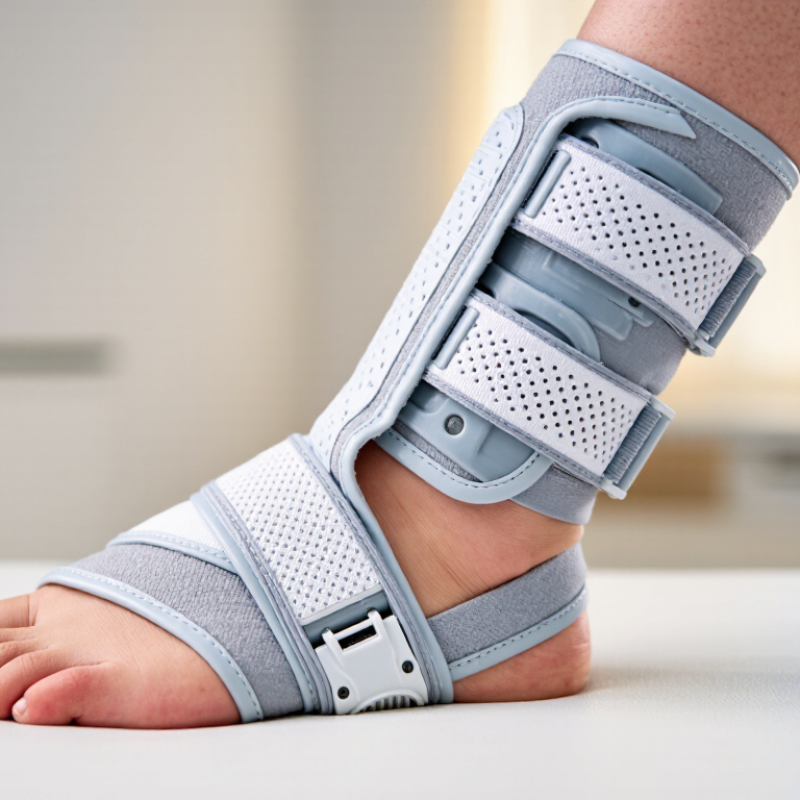
An ankle splint is a wearable support designed to limit harmful ankle movement. It may use firm panels, cushioned sleeves, straps, or hinges. These parts guide the ankle toward a safer position during walking or exercise. A semi-rigid splint can reduce excessive rolling, while a softer design offers compression and warmth. It does not “heal” an injury by itself. That distinction matters.
Research helps explain the need for support. A systematic review in Sports Medicine estimated ankle sprain incidence at about 2.15 cases per 1,000 person-years (Doherty et al., 2014). The American Academy of Orthopaedic Surgeons also identifies bracing and rehabilitation as common elements of ankle-sprain care.
A splint may reduce unwanted inversion, especially when uneven ground suddenly shifts beneath the foot. It can also improve confidence, though confidence is not the same as full recovery.
The heel should remain seated, and the toes should not feel numb or cold. Too much pressure can irritate skin and restrict circulation. Too little support may provide mostly psychological comfort.
A common mistake is wearing a splint continuously without rebuilding strength and balance. Clinicians often combine support with gradual motion, calf strengthening, and single-leg balance exercises.
Persistent swelling, severe pain, deformity, or difficulty bearing weight requires professional assessment. Even a simple ankle sprain deserves careful attention.
Why Use an Ankle Splint for Better Ankle Support?
Key Benefits of Using an Ankle Splint for Support
An ankle splint can help limit painful movement after a mild sprain, joint strain, or period of weakness. It supports the ankle while still allowing controlled movement during daily activities. A well-fitted splint may reduce unwanted side-to-side motion when walking on uneven ground. That extra stability can make simple tasks feel less uncertain.
Comfort matters greatly. A splint should feel secure, not painfully tight. Check your toes for normal color, warmth, and sensation after wearing it. Some designs provide light compression, which may help manage swelling when combined with rest and elevation. It can also remind users to slow down instead of placing full pressure on a healing joint. Small details matter.
It is not a perfect fix. Wearing a splint for too long may encourage stiffness or dependence without suitable exercises. A healthcare professional can assess the injury and recommend the right support level. Follow medical advice, especially after severe pain, deformity, numbness, or an inability to bear weight. Clean the splint regularly, inspect the skin, and stop using it if irritation develops. Support should assist recovery, not hide a worsening problem.
An ankle splint can provide support when an ankle feels weak, swollen, or painful after a sprain. The right type depends on the injury, movement needed, and stage of recovery. A poor fit may create new pressure points, so comfort alone should not guide the choice.
A lace-up ankle brace uses adjustable straps to limit side-to-side movement while allowing some flexibility. It often suits mild sprains, sports activity, and daily walking.
An elastic compression sleeve gives light support and may help manage swelling during routine movement. However, it offers less protection for an unstable joint.
A stirrup splint has firm side supports and is commonly used after moderate sprains. It limits rolling without completely blocking ankle motion.
A hinged ankle brace allows controlled movement while restricting dangerous twisting. Clinicians may recommend it during later rehabilitation or when stability remains limited.
A rigid walking brace offers stronger protection for more serious injuries, but it can affect balance and walking patterns. That matters.
Check the skin after wearing any splint. Red marks, numbness, cold toes, or increasing pain suggest excessive pressure. The brace should feel secure, not painfully tight. Medical assessment is important when swelling is severe, weight-bearing is difficult, or pain continues. I once underestimated how quickly stiffness could develop with over-support. Gentle, approved exercises may be needed alongside protection, not replaced by it.
Choosing the right ankle splint starts with the problem you need to solve. A mild sprain may need compression and gentle movement. A serious ligament injury may require firmer side support. Pain location matters. So does swelling. A healthcare professional can assess stability, circulation, and possible fracture before you buy one. Do not use a splint to hide worsening pain.
Look for a measured fit, not a “one size fits all” promise. Your heel should sit fully inside the brace, while your toes remain warm and free. Adjustable straps should feel secure without causing numbness, tingling, or skin discoloration.
Wear the splint with the sock and shoe you normally use. Walk across the room. Check whether it slips, rubs your ankle bone, or changes your balance. It should support movement, not create a new problem.
Choose the support level carefully. A rigid design can protect a healing ankle, but it may reduce flexibility during walking. A softer sleeve feels comfortable, yet it may offer too little control after repeated rolling injuries. Follow rehabilitation guidance, and inspect your skin after removal. This small habit is easy to forget. Comfort alone is an imperfect test. Reassess the fit as swelling changes, and seek medical advice if pain, numbness, or instability continues.
An ankle splint can limit unwanted movement and provide steady support during recovery. Its value depends on correct use, not maximum tightness. Before wearing it, check the skin for swelling, cuts, or unusual redness. A healthcare professional should confirm the proper splint type, especially after a serious injury or surgery.
Start with a clean, dry ankle. Place the heel fully into the rear section, then fasten each strap gradually. The splint should feel secure, but your toes must remain warm, pink, and flexible. Walk a few steps on a safe, level surface. If the splint shifts, pinches, or causes numbness, remove it and reassess the fit. Too much pressure can worsen swelling.
Follow the care instructions for the material. Many fabric supports can be hand-washed with mild soap, but some rigid parts need only gentle wiping. Let the splint air-dry completely before wearing it again. Heat from a radiator may weaken or deform the structure. Check the stitching, fasteners, and padding each day. Replace damaged parts through qualified medical guidance.
Do not wear the splint longer than advised. Some people need support during walking, while others may need scheduled breaks for skin checks and movement. I would not assume nighttime use is suitable. Pain relief can also make problems easier to ignore, which is why regular checks matter. Persistent pain, blue toes, increasing swelling, or numbness needs prompt medical attention.