A clean incision can look reassuring under bright operating-room lights. Hours later, drainage, friction, or a loosened dressing can change the picture. Surgical Wound Care Products help hospital teams protect incisions, manage exudate, and support routine assessment. Yet no dressing replaces sound technique, timely review, or a plan matched to the patient.
The scale of the challenge is documented. The CDC’s Surgical Site Infection Event guidance reports that about 2–4% of patients undergoing inpatient surgery develop a surgical site infection. The World Health Organization’s 2018 Global Guidelines for the Prevention of Surgical Site Infection cite an estimated incidence of roughly 11 infections per 100 surgical patients in low- and middle-income countries. These figures describe different settings, but both underline why product choice deserves attention. Small details matter.
Dr. R. Gary Sibbald, a wound-care physician and academic, described wound-bed preparation as “the management of the wound to accelerate endogenous healing or to facilitate the effectiveness of other therapeutic measures.” His definition keeps the focus on the wound, not just the package. Still, product labels can make selection seem easier than it is. This guide examines ten Surgical Wound Care Products commonly considered in hospitals, from gauze and transparent films to advanced absorbent dressings. It compares practical features, typical uses, and limits. The list is a starting point, not a universal ranking; local protocols and patient needs should guide final selection.

After surgery, wound care products do more than cover an incision. They help protect the site while clinicians monitor healing. A sterile gauze dressing can absorb light drainage, while a transparent film allows inspection without repeated removal. For wounds with more fluid, absorbent foam may help manage moisture and reduce leakage onto clothing or bedding. Small details matter. A dressing that fits poorly can wrinkle near a joint, loosen during movement, or irritate fragile skin.
Choosing a product depends on incision location, drainage, skin condition, and the surgeon’s care plan. Not every wound needs an advanced dressing. Some patients need simple sterile coverage and scheduled changes; others require closer assessment. Clinicians should use clean technique, document changes, and watch for spreading redness, increasing pain, warmth, fever, or unexpected drainage. These signs need prompt clinical review, not just a different dressing. Product choice is not always obvious at the bedside, and reassessment may change the plan. Even a well-chosen dressing supports healing; it cannot replace careful follow-up.
Choosing surgical wound care products starts with the wound, not the catalog. Staff should consider incision size, drainage level, surrounding skin, and the expected wear time. A dry incision may need a simple protective cover. A wound with heavier drainage may require greater absorbency. Fit matters. Check whether available sizes cover the incision without excess overlap that complicates movement or inspection.
Review sterility, packaging integrity, and clear instructions for use. Packaging should open easily at the bedside without compromising the sterile field. Look for materials that manage moisture while protecting the wound from outside contamination. Patients may have sensitivities to adhesives, so skin tolerance deserves attention. Removal matters, too. A dressing that sticks to fragile skin can cause discomfort or damage during changes. No dressing suits every patient.
Hospital teams should also assess how products fit daily workflows. Can staff apply them with routine training? Are the change intervals practical for the unit’s schedule and the patient’s needs? Consider storage space, consistent supply, and total cost, not just the price per item. A small evaluation in real clinical conditions can reveal handling problems that product descriptions miss. Even a careful trial has limits: patient skin, drainage, and movement vary, so feedback should be reviewed over time.
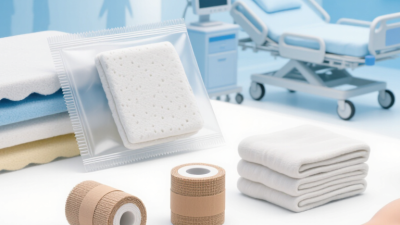
Hospital teams rely on several products to protect surgical wounds and manage drainage. Sterile gauze absorbs light fluid and supports gentle cleansing. A non-adherent contact layer helps limit sticking during dressing changes. Transparent film covers clean, low-drainage incisions while allowing visual checks. Foam dressings cushion the site and absorb moderate exudate. Hydrocolloid dressings maintain a moist environment for selected wounds. Alginate dressings absorb heavier drainage and may form a soft gel. Hydrofiber dressings also manage fluid, helping reduce pooling at the wound surface. An abdominal pad offers extra absorbency for larger incisions. Skin barrier wipes protect nearby skin from moisture and adhesive irritation. Medical tape or fixation devices keep dressings in place.
The right combination depends on wound depth, drainage, surrounding skin, and the clinician’s assessment. A dry incision may need little more than protection; a draining wound calls for closer fluid management. Small details matter. Staff should check for leakage, loose edges, and skin redness during routine changes. Dressings should be changed according to the care plan and product instructions, using clean technique. No single dressing suits every incision, and product choice can require adjustment as healing changes. In practice, the simplest option is not always the easiest to keep secure. Reassess rather than relying on habit.
Even among the top hospital wound-care products, the right choice depends on wound condition, not a fixed ranking. A closed incision with minimal drainage usually needs protection from friction and contamination, not a thick absorbent stack. A sterile nonadherent contact layer can reduce sticking. A transparent film or light bordered dressing may protect the site while allowing visual checks. Follow the surgical team’s orders and local infection-prevention protocols. Small details matter.
When fluid output rises, choose a dressing with enough absorbency to limit leakage and protect surrounding skin. Absorbent foam or a superabsorbent pad may suit heavier drainage. Alginate or gelling-fiber dressings may be appropriate for selected moist wounds. They need a secondary cover and should not be used on dry wound beds. For an open cavity, use packing only when directed, place it loosely, and document the material used. Never pack tightly.
At each dressing change, note the amount and appearance of drainage, and check whether incision edges remain together. Look for redness, soggy skin, or adhesive injury nearby. Report fever, spreading redness, increasing pain, or sudden drainage changes to the responsible clinician. A dressing that looked right yesterday may be wrong today. It is easy to focus on the pad and miss the skin beneath it; that oversight deserves attention.
| Product | Typical incision or drainage need | How it helps | Selection considerations | Important use notes |
|---|---|---|---|---|
| 1. Sterile gauze pads | Dry or lightly draining incisions; wound cleansing or secondary coverage. | Provides a simple absorbent layer and can protect a wound when used as a sterile dressing. | Choose a size that covers the incision and surrounding area without excessive overlap; consider a non-adherent contact layer if sticking is a concern. | Gauze may adhere to a drying wound. Change it according to the care plan and replace it if wet, soiled, or displaced. |
| 2. Adhesive island dressing | Closed, primarily healing incisions with low to moderate drainage. | Combines an absorbent central pad with an adhesive border for convenient coverage. | Match the pad size to the incision and check that the adhesive is compatible with the patient’s skin and the location of the wound. | Do not stretch the adhesive during application. Inspect the incision and surrounding skin at the intervals specified by the clinical protocol. |
| 3. Transparent film dressing | Closed, dry or minimally draining incisions, or protection of intact skin around a wound. | Creates a clear protective cover that allows visual inspection without removing the dressing. | Use where moisture and exudate are low; select a size that seals on intact, dry surrounding skin. | Film is not absorbent and can trap fluid. Reassess if drainage increases, the seal lifts, or the skin becomes irritated. |
| 4. Silicone-bordered foam dressing | Incisions with moderate drainage or sites where cushioning and gentle dressing removal are useful. | Absorbs exudate and provides a soft protective layer; a silicone contact surface can reduce trauma during removal. | Choose a dressing with enough absorbent area for the expected drainage and a border suited to the wound location. | Replace when saturated, leaking, or according to the product instructions and facility protocol. Check for maceration beneath the dressing. |
| 5. Hydrofiber dressing | Moderately to heavily exuding open surgical wounds, when an absorbent primary dressing is needed. | Absorbs wound fluid and forms a gel-like material on contact with exudate, helping contain fluid within the dressing. | Use an appropriate size and apply only to the wound area as directed; a secondary cover is commonly needed. | Not intended for dry wounds. Follow instructions for removal and ensure any cavity filling is loose rather than tightly packed. |
| 6. Calcium alginate dressing | Moderately to heavily exuding open wounds, including suitable surgical cavities. | Absorbs fluid and can conform to an irregular wound surface; some alginate products may assist with minor capillary bleeding. | Choose a form and size that can be placed and retrieved safely. A secondary dressing is generally required. | Generally unsuitable for dry wounds or wounds with little exudate. Do not tightly pack a cavity; follow product directions for removal. |
| 7. Non-adherent contact layer | Incisions or wound beds where the secondary dressing may otherwise stick to the tissue. | Provides a low-adherence interface while allowing drainage to pass to an absorbent outer dressing. | Pair with a suitable secondary dressing and select a size that covers the wound without excessive overlap. | Some contact layers are not absorbent. Ensure drainage can reach the secondary layer and change according to the product instructions. |
| 8. Antimicrobial dressing, such as a silver-containing dressing | Selected wounds where an antimicrobial dressing is considered appropriate under clinical assessment and facility policy. | Provides an antimicrobial component alongside wound coverage or absorption, depending on the dressing type. | Choose the format based on wound depth, drainage, and compatibility with the required secondary dressing. | Not a substitute for infection assessment, source control, or prescribed treatment. Use only when clinically indicated and reassess the need regularly. |
| 9. Split gauze drain dressing | Drain exit sites, such as sites with a surgical drain passing through the skin. | The pre-cut opening fits around the drain tubing and helps absorb drainage at the exit site. | Select an opening that accommodates the tubing without pulling or compressing it; secure the dressing without restricting drain function. | Keep the drain tubing positioned as prescribed. Change the dressing when wet or soiled and monitor the site for increasing redness, pain, or drainage. |
| 10. Negative pressure wound therapy (NPWT) dressing system | Selected open surgical wounds or high-risk closed incisions when prescribed by a qualified clinician. | Uses a sealed dressing connected to a pump to apply controlled negative pressure and manage wound fluid. | Requires a system and dressing appropriate to the wound type, location, and care setting; staff training and reliable seal management are important. | Not suitable for every wound. Requires clinical assessment, contraindication review, and monitoring under the prescribed protocol and device instructions. |
Clinical note: Product selection depends on wound assessment, drainage, incision status, patient factors, and facility protocols. Follow the product instructions and the treating clinician’s plan.
Top 10 Surgical Wound Care Products for Hospitals
Hospital Practices for Applying, Monitoring, and Replacing Dressings
Reliable surgical wound care depends on consistent technique, not simply on choosing a dressing. Clean hands, appropriate protective equipment, and aseptic handling help reduce contamination during dressing changes. The CDC’s 2017 guideline recommends protecting surgical incisions with a sterile dressing for 24–48 hours after surgery; follow the patient’s care plan when instructions differ. The WHO’s Global Guidelines for the Prevention of Surgical Site Infection report an estimated 11.8 infections per 100 surgical patients in low- and middle-income countries, compared with 1.2 per 100 in high-income countries. Rates vary by setting and study, but the contrast highlights the need for dependable routines.
At each change, inspect the incision and surrounding skin under good light. Note drainage, odor, redness, swelling, wound edges, and the patient’s pain. Record findings and the dressing-change time; small details matter. Replace a dressing when it becomes wet, loose, or soiled, or when the care plan calls for it. Choose materials according to drainage, wound location, and skin fragility—not habit alone. Report spreading redness, pus, fever, worsening pain, or wound separation promptly. Busy wards are imperfect; charting can lag. That gap deserves attention.
Hospital Practices for Applying, Monitoring, and Replacing Dressings
CDC guidance recommends keeping a dressing on a primarily closed surgical incision for 24–48 hours. Replace it sooner if it becomes wet, loose, or visibly soiled, or when clinical assessment indicates a change is needed. Follow local protocols and the treating clinician’s instructions; this interval is not a universal replacement schedule.
Common hospital product categories include gauze pads, transparent film dressings, absorbent pads, foam dressings, hydrocolloid dressings, alginate dressings, hydrofiber dressings, silicone contact layers, negative-pressure wound therapy dressings, and surgical tapes.
Source: CDC Guideline for the Prevention of Surgical Site Infection (2017), postoperative dressing recommendations.